
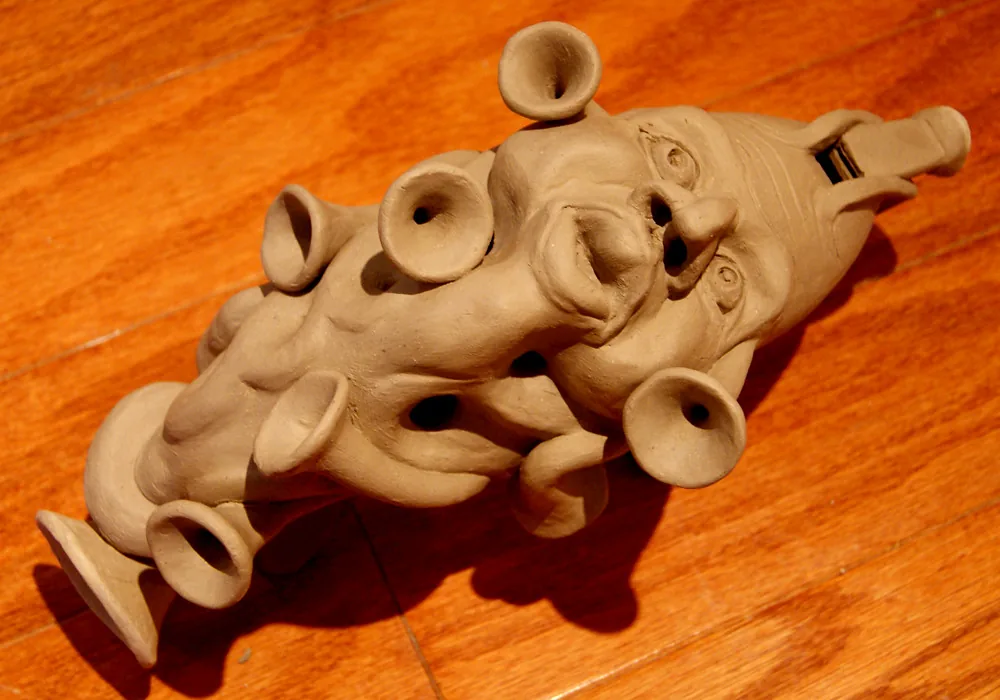
Purpose of this article: to offer a clear, structured guide to fitting daily practice into your schedule. Short, regular sessions help you improve without becoming discouraged.
What is an ocarina? It is a small wind instrument that is approachable and easy to pick up. Its sound resembles a gentle whistle, and you can soon play melodies even without a musical background.
Choosing one and setting a budget: a plastic or ceramic model is enough to produce stable notes and practise scales. Options range from inexpensive plastic to porcelain for advanced players.
The daily plan combines a warm-up, note and scale exercises, work on a short piece, and a quick review. This routine lets you measure your progress from week to week.
To get started, consult a practical guide and online tabs for your first steps: learn to play the ocarina.
Why choose this wind instrument today?
Compact and steeped in thousands of years of history, this instrument remains relevant to musicians today.
Accessibility: the ocarina is light, easy to carry, and requires moderate breath pressure. It suits beginners and adults returning to an instrument after a break.
Sound: its gentle tones fit a range of styles, from traditional songs to modern arrangements. An alto ocarina in C is often recommended for beginners.
- Versatility: solo playing, simple accompaniment, and family music making.
- Value for money: entry-level models can offer good tuning without excessive cost.
- Cognitive benefits: finger and breath coordination, concentration, and breath control.
| Benefit | Effect | Who it suits |
|---|---|---|
| Compact size | Easy to carry; suitable for short sessions | All ages |
| Moderate breath pressure | Less effort and clean notes | Beginners and older adults |
| Learning resources | Sheet music, tabs, and apps | Independent learners |
In short, this instrument combines a cultural heritage with modern simplicity. A short guide is enough to start learning the ocarina and quickly enjoy playing.
Choose your ocarina before you begin
Choosing well makes the first steps easier. First, consider the design: transverse or pendant. A transverse ocarina generally has 10 to 12 holes and allows you to learn fingerings gradually.
A practical comparison:
- 12-hole transverse ocarina in C — excellent for beginners, with a wide range of about 13 notes and plenty of learning resources.
- 4- to 6-hole pendant — compact and suitable for children, but requires you to memorise fingering combinations.
Registers and uses: the soprano is high-pitched and inexpensive. The alto, often recommended, is versatile. The bass has a low sound but is bulky and costly.
Materials and prices in France: plastic works well for a first experience (€10–€40). Ceramic offers a warmer sound and better resonance (€30–€60). Wood and porcelain are advanced options.
“For beginners, a 12-hole transverse alto ocarina in C remains an excellent all-round choice.”
| Feature | Advantage | Who it suits |
|---|---|---|
| 12 holes | Wide repertoire and room to progress | Teenagers and adults |
| 4 to 6 holes | Small size and simplicity | Children and first-time players |
| Ceramic or plastic | Sound or durability | Students and teachers |
Final tip: avoid untuned decorative Peruvian ocarinas. Test the pitch of the notes and check that your fingers cover the holes properly before buying.
The essentials of learning to play
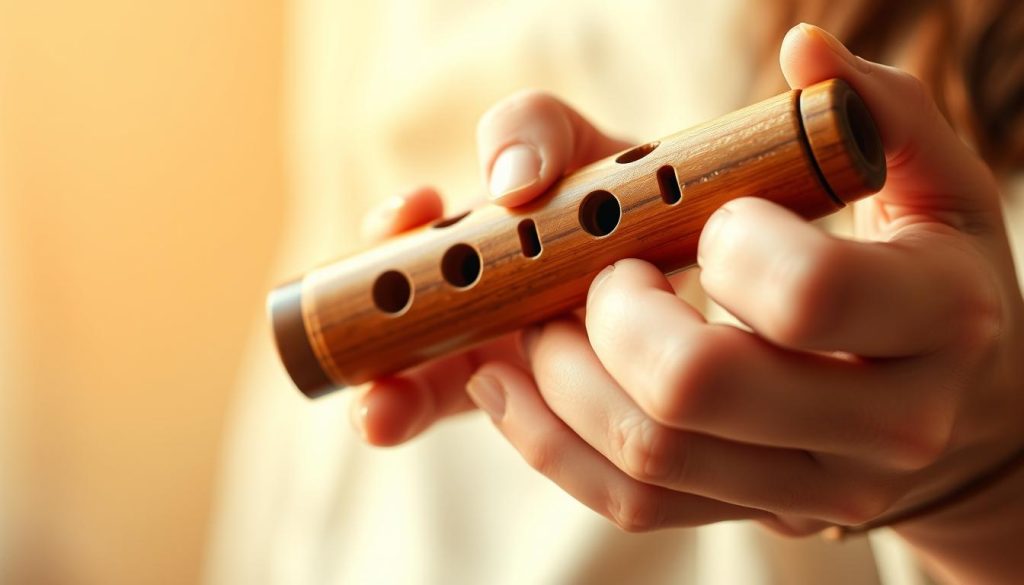
Good technique and breath control are essential for producing clear notes from your first sessions. Start by establishing a steady grip: right hand facing outward, left hand facing inward, right index finger near the mouthpiece, and right thumb supporting the instrument’s weight.
Position and fingers: keep the instrument parallel to the ground and cover the holes fully with the pads of your fingers. Never cover the main sound hole: the ocarina’s “voice” must remain unobstructed.
Breathing and embouchure
Use diaphragmatic breathing: inhale through your nose, feel your abdomen expand, then exhale gently. Stand with your back straight and shoulders relaxed to control your breath.
First notes and articulation
Place your lips on the mouthpiece without tension. Practise sustained notes to improve your intonation, then play two or three neighbouring notes in succession.
- Articulate with “tu” and “du” to start notes clearly.
- Keep your fingers close to the holes and minimise their movement.
- Use a mirror to correct your posture and reduce unnecessary movement.
- If you hear a whistle, check that the holes are fully covered and reduce the airflow.
Short routine: 5 minutes on posture, 5 minutes on breathing, 5 minutes on articulation, and 5 minutes on simple notes. Regular work on these basics speeds up your progress.
Learn to play the ocarina: a 30-minute daily practice plan
Divide your session into clear blocks to work on posture, fingerings, and musicality without losing focus.
Focused warm-up
5 minutes: posture, diaphragmatic breathing, and “tu” and “du” attacks. Stand straight with your shoulders relaxed. Hold long notes to steady your intonation and airflow.
Fingerings and the C major scale
10 minutes: practise the C major scale (C, D, E, F, G, A, B, C) ascending and descending. Gradually memorise the finger positions and work on one hand at a time if needed.
The “short piece” method
12 to 14 minutes: choose a melody of 4 to 8 bars, such as “Frère Jacques” or “Au clair de la lune”. Work in 2-bar sections, first legato and then staccato. Set a metronome to 60 BPM and increase the speed by one step only after three successful repetitions.
One-minute review
1 to 3 minutes: note any troublesome notes and adjust the time you devote to them in your next session. Use OcarinaTuner and a recorder to track your progress.
A plan for progress over time
Progress is easier to measure when you set weekly goals.
Week 1: focus on holding the instrument, covering the holes properly, and producing clear sounds. Work note by note and hole by hole, and record yourself to assess your intonation.
Weeks 2 to 3: improve the flow of your scales and fingering changes. Play up and down without pausing, and begin learning one or two simple songs.

From week 4: work on controlling your speed. Keep a steady tempo in your short pieces and create a 4-bar mini-solo to begin improvising.
Next steps
- Months 2 to 3: expand your repertoire, build breath endurance, and play with dynamics.
- Every week: compare your recordings with a reference recording to track your progress.
- Extra practice: break down difficult transitions, such as G, A, B.
- Tools: use a metronome and backing tracks to develop your ear and intonation.
| Period | Goal | Measure of progress |
|---|---|---|
| Week 1 | Holding the instrument and producing clear sounds | Clean notes and a reference recording |
| Weeks 2 to 3 | Fluid scales | Scales without pauses and confident fingering changes |
| From week 4 | Tempo and improvisation | Steady pieces and a well-controlled mini-solo |
Over time, the ocarina remains an approachable instrument: with regular practice, you can play your first melodies within a few weeks. Write down your goals and adjust how you spend your practice time to suit your needs.
Common difficulties and how to fix them
Mistakes often involve three areas: intonation, finger coordination, and posture.
Intonation and tuning: playing with an accompaniment helps you hear beats when a note is out of tune. Adjust your breath pressure until the beats disappear.
Practise for 5 minutes with a C drone or a visual tuner to steady the start and sustain of each note.
Finger control
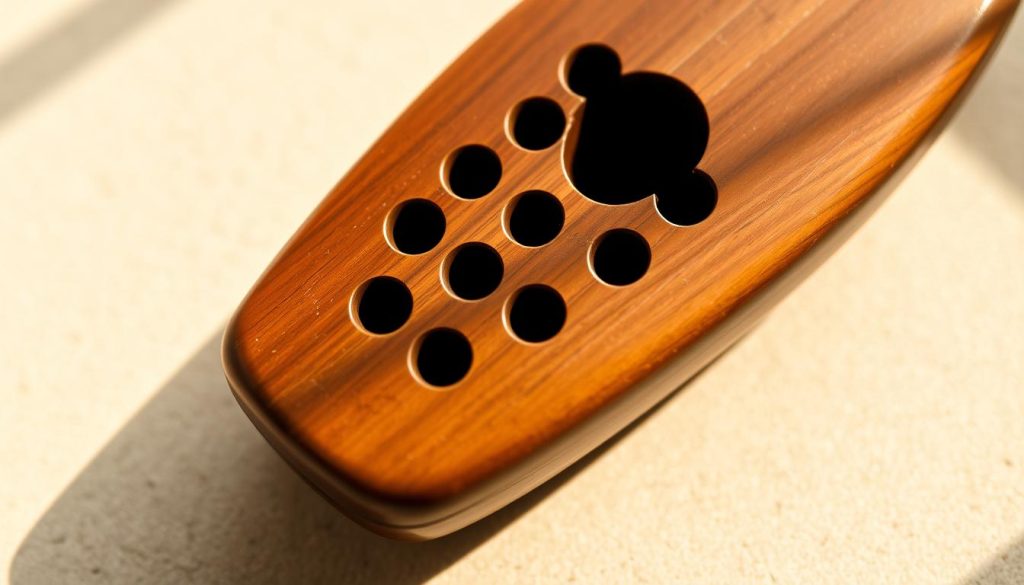
Keep movements small and avoid lifting your fingers too high. Practise slowly in front of a mirror.
It helps to isolate your less steady hand: keep the other hand in place if necessary and repeat difficult changes until they become smooth.
Posture and breath control
Stand with your back straight and your head aligned with your body. Keep your chest open for steadier breathing.
For high notes, regulate the airflow without blowing too hard. If a whistle appears, reduce the pressure slightly and check that your fingers cover the holes fully.
- Practice time: set aside time each week for corrections; 5 minutes of focused work is enough.
- How to reinforce your progress: record yourself, listen, correct, and repeat until the problem disappears.
- Relaxation: relax your shoulders and jaw; a relaxed body helps you produce steadier notes.
| Problem | Common cause | Correction |
|---|---|---|
| A note that “wavers” | Unsuitable breath pressure | Adjust your breath with a drone or tuner |
| Abrupt finger movements | Movements are too large | Practise slowly, one hand at a time, in front of a mirror |
| Whistling on high notes | Blowing too hard or air leaks | Reduce the airflow and check that the holes are fully covered |
| Poor posture | Body tension | Stand with your back straight and breathe with your diaphragm |
Resources and tools for learning the ocarina
Well-chosen resources and regular progress checks can help you develop your musical skills faster.
Where to find sheet music and tabs: start with OcarinaTabs.org, which offers thousands of tabs. You can also use dedicated sheet music from STL and MuseScore to transpose and simplify your songs. The Art of Ocarina helps you adapt piano pieces into playable melodies.

Tuners, apps, and progress tracking
Use OcarinaTuner to check your intonation. Add a metronome and an audio slowdown app to break down fast passages.
Record your sessions each week and note your progress. Join Ocarinapolis for feedback and exercise ideas.
| Resource | Use | Benefit |
|---|---|---|
| OcarinaTabs.org | Tabs | Wide choice of songs |
| MuseScore | Transposition | Adapting pieces to different keys |
| OcarinaTuner | Tuning | Steady intonation |
Before each session, spend 5 minutes choosing a melody or scale. For practical advice, read how to play the ocarina.
Care and instrument quality
A short care routine is enough to preserve the instrument’s tuning and tone.
Use and care
Let your ocarina air-dry after each session. Remove moisture to preserve the quality of its notes.
To clean the whistle, slide a small piece of newspaper into the mouthpiece. Wipe the outside with a soft cloth.
Managing condensation
Condensation often builds up in plastic models during long sessions. Take short breaks to let it clear and restore a clean sound.
If whistling persists, check that your fingers cover the holes fully and inspect the mouthpiece; adjusting your breath often solves the problem.
Avoiding buying mistakes
Choose a specialist retailer. Test a few fingerings and hold some notes to check the intonation before buying.
Avoid decorative Peruvian ocarinas, which are often untuned. Their imprecise intonation makes learning harder.
| Aspect | Advice | Effect |
|---|---|---|
| Material | Plastic: clean with soapy water. Ceramic: handle with care. | Durability and tone |
| Protection | Hard case (Pelican, Noblex) and ocarina stand | Fewer knocks and safer transport |
| Testing before purchase | Check the holes, sustained notes, and reviews of the retailer | Better intonation and easier practice |
Regular care extends an ocarina’s life and makes every session more productive. Look after your instrument, and it will reward you with its sound.
Conclusion
This summary covers the journey: choose a good instrument, build a solid foundation, follow a short routine, and improve week by week.
Key points: posture, diaphragmatic breathing, “tu” and “du” articulation, and methodical scale practice before increasing speed. Regular practice, however brief, produces better tones and more accurate intonation.
A tuner, metronome, tabs, and recordings help you measure progress. You can then explore vibrato and simple improvisation to enrich your playing.
Set a 4-week goal, such as playing a melody without mistakes at your target tempo, and a 3-month goal, such as mastering two pieces and playing a scale smoothly. For guidance, consider group lessons, a teacher, or an online community.
If you encounter a difficulty, revisit the technical sections. To go further, read how to learn the ocarina easily. A clear method, steady habits, and a good instrument form the foundation for successful learning.