
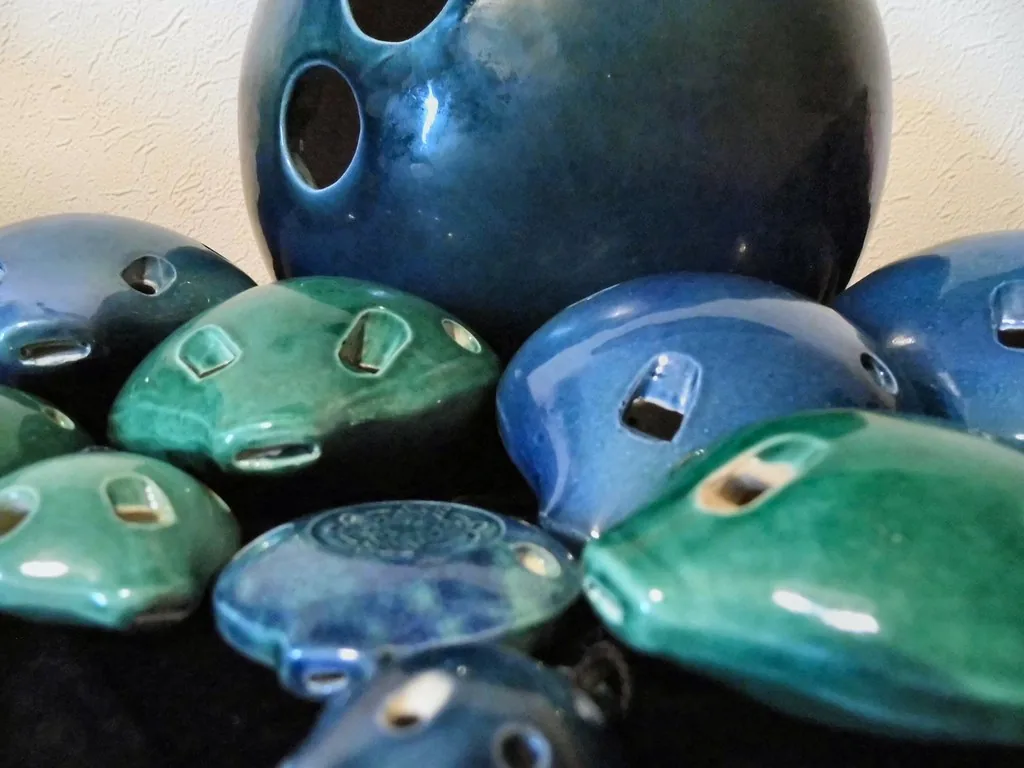
The ocarina appeals through its simplicity and rich sound. This wind instrument, popularized in the nineteenth century by Giuseppe Donati, comes in ceramic or plastic, with each material offering a different tone and level of durability.
For beginners, 12-hole models can play a full chromatic scale. Tablature makes it easier to learn without reading music, and online communities share scores and practical advice.
This guide explains why common keys shape how you play, how the holes affect fingering, and how to choose a model—a pendant for portability or a transverse ocarina for versatility.
By the end, you will have the basics of posture, essential fingerings, exercises, and free resources to learn to play with confidence. To choose sheet music suited to your instrument, see this selection: which sheet music to choose.
Why practice ocarina scales in different keys today?
Practicing note sequences that match the instrument’s actual key helps stabilize your intonation.
Studies show that 68% of beginners correct their intonation in about three weeks with a tuner. A short, regular routine improves coordination between the fingers and breath.
Practicing a scale in each key aligns your fingering with the instrument’s actual tuning. This reduces confusion when reading sheet music and speeds up progress.
For busy musicians, focused exercises take little time each day. Using a metronome, breathing calmly, and recording your progress make practice more effective.
- Start slowly to stabilize the airflow.
- Repeat the same sequences to strengthen finger memory.
- Use a tuner and digital tools to measure progress.
| Goal | Daily practice | Expected result |
|---|---|---|
| Intonation and breath | 10 min | More stable airflow |
| Finger memory | 15 min | Reliable fingering |
| Focused sight-reading | 20 min | Fewer mistakes in sheet music |
Choosing a C, F, G, or A ocarina to get started
Choosing the right instrument affects how quickly you learn and how comfortable you feel. Its material, range, and number of holes determine how it handles and the sounds it can produce.
Materials and models
Ceramic: warm sound and pleasing harmonics, but fragile. Let it air-dry, never in direct sunlight.
Plastic: light, durable, and convenient to carry. Wipe away condensation after each session.
The 12-hole transverse ocarina offers an extended chromatic range. The 4–6-hole pendant favors simplicity and portability.
Range and register
Soprano: high and bright, ideal for fast melodies.
Alto: a balanced choice for beginners, offering a good compromise between tone and breath requirements.
Bass: rich-sounding, but requires more breath.
Number of holes and range
- 4 holes: limited range and simple handling for learning fingerings.
- 6 holes: more options without too much complexity.
- 12 holes: accidentals and more notes, with the versatility to play different pieces.
Practical tip: to get started, choose a 12-hole alto ocarina in C from an established brand (STL Ocarina, Hindocarina). It offers comfort, accurate tuning, and quick access to a wide range of notes.

Playing basics: posture, breath, and intonation for clear notes
Good posture reduces tension and makes every note clearer. This simple foundation quickly improves sound quality.
“Tree” posture, hand placement, and a relaxed embouchure
Adopt the “tree” posture: feet about 30 cm apart, back aligned, and shoulders relaxed. Keep your head in a neutral position to stabilize the airflow.
Position your hands without putting pressure on the mouthpiece. Avoid pressing too hard with your lips, which causes whistling and reduces accuracy.
Breath control: candle exercise, steady airflow, and the “OcarinaTuner” app
Breathe deeply using your diaphragm, then exhale evenly to maintain a steady flow. Try the candle exercise: make the flame flicker without blowing it out.
Use OcarinaTuner to check your intonation in seconds. This tool helps you correct pitch differences in real time.
Stable airflow: avoiding overblowing and whistling
Develop stable airflow by holding notes for a long time. Start with 5 minutes of controlled breathing, followed by 5 minutes of sustained notes.
Physical cues: feel the instrument vibrate steadily and keep your torso in the same position. Practice in short, regular sessions to establish the technique.
- Basic warm-up: 5 min of lip exercises and 5 min of sustained notes.
- Practice briefly but often to improve over time.
- Keep your embouchure relaxed for greater accuracy.
Essential fingerings: adapting your positions to 4-, 6-, and 12-hole systems
Understanding hole numbering and using visual cues speeds up learning.
Hole-numbering guides and color reminders
Numbering follows a logical order: 1 at the top, then 2, 3… downward on pendant models; on transverse models, count from left to right up to 12. Use a simple color code to remember each hole: red for 1–2, yellow for 3–4, green for 5–6 (and other colors for 7–12).
Clear diagrams and hybrid tablature (diagram + staff) help beginners connect finger movements with rhythm. Always read diagrams in the same direction to avoid confusion.

Moving between systems and playing accidentals
Basic positions:
- 4 holes: simple hole coverage, a good introduction to fingering.
- 6 holes: a common system for melodies; a frequent example for middle C is XXXX56 (holes 5 and 6 open).
- 12 holes: the last holes allow semitones and provide more possibilities.
“Work on one hole at a time: hold the note, open or close one hole, then connect the movements in short phrases.”
To transfer a fingering from a 6-hole system to a 12-hole one, keep the first holes covered in the same way and use the additional holes to adjust the note. The last holes are often used for accidentals: combine 11–12 to raise a note by a semitone without changing the initial position.
| System | Typical position | Use of the last holes |
|---|---|---|
| 4 holes | Simple, for learning the basics | Few accidentals |
| 6 holes | Versatile; middle C example: XXXX56 | Last holes for subtle variations |
| 12 holes | Chromatic, extended registers | Semitones and accidentals |
Technical tips: keep your hands close to the instrument, your fingers curved, and your breath steady. Practice in short sequences: hold a note, change one finger position, then link two or three notes into a musical phrase.
To choose sheet music suited to your system, see this selection: which sheet music to choose. Hybrid tablature is especially useful for playing and making quick progress.
Ocarina scales and keys: C, F, G, A
Start each session with a slow ascending scale to establish a stable sound.
C major—step by step: with a metronome set to 60 BPM, first hold each note for a long time. Place each fingering precisely, then ascend and descend gradually. Increase the tempo in stages.
F major—moving to B-flat: add B-flat while keeping your breath steady. Practice passages that use the last holes, holding each note before linking them.
G major—adding F-sharp: make smooth transitions by moving only one finger at a time. Avoid clicking sounds by connecting movements in short phrases.
A major—three sharps: this scale calls for precise fingering and fine breath control. Favor short sets (2–3 minutes), with breaks to rest your embouchure.
Sample routine: sustained notes, an ascent by step, a mirrored descent, then intervals of a third. Check each note with OcarinaTuner before increasing the tempo.
| Key | Focus | Suggested duration |
|---|---|---|
| C major | Metronome at 60 BPM; ascend and descend | 2–3 min per set |
| F major | B-flat and precise transitions | 2–3 min per set |
| G major | Add F-sharp and practice transitions | 2–3 min per set |
| A major | Three sharps and breath control | 2–3 min per set |
For a fuller method and guided exercises to play the ocarina, see this practical guide: learn to play the ocarina easily.
Practical exercises for steady, rapid progress
A focused method turns short sessions into visible progress. Begin each session in three stages: warm-up, mirrored ascent and descent, then articulation.

Gradually increase the metronome from 50 to 80 BPM
Start at 50 BPM. Play ascending scales, then mirrored descending scales. Increase the tempo in stages once you have played them accurately three times in a row.
Articulation and expression
Practice legato to connect notes and staccato to make them clearer. Add a slow diaphragmatic vibrato once your breath is steady.
12-week program: 15 minutes a day
Sample routine: 3 minutes of warm-up, 3 minutes of ascending and descending scales, 3 minutes of note attacks, 3 minutes of short melodies, and 1 minute of recovery. Repeat each block three times according to the week.
Practical tip: record yourself once or twice a week to measure your progress. Consistent practice over several years builds a strong foundation for playing this instrument.
Sheet music, tablature, and transposition for your instrument’s key
Knowing how to read tablature changes how you approach a piece. Visual codes—●/○, numbers, or colors—show which holes to cover. Note values (quarter notes, half notes, eighth notes) and barlines guide the rhythm.
Reading tablature: symbols, diagrams, and note lengths
First, identify the diagram: each filled dot (●) represents a covered hole. Numbers show the order; colors help you remember the positions.
Step-by-step example: play a short phrase while reading the tablature, count the beats, and check each note with a tuner.

Treble-clef sheet music: accidentals, transposition with MuseScore, and tuning
On the staff, identify sharps and flats before playing. With MuseScore, transpose the score into your model’s key and review the line to follow the changes.
Useful resources
OcarinaTabs.org offers thousands of scores and tablatures. STL and Feria Musica offer educational collections arranged by level.
| Resource | Use | Benefit |
|---|---|---|
| OcarinaTabs.org | Reference material | Wide selection |
| STL | Collections | Sorted by level |
| Feria Musica | Educational sheet music | Guided methods |
“To transpose a theme in G for a C ocarina, adjust the score, play each note, and check the tuning with a tuner.”
Organize your scores by key and model, write specific fingerings in the margins, and use this practical reference to save time. To learn more about reading music and tablature, see this detailed guide.
Avoiding pitfalls: common mistakes and ocarina care
Avoiding common mistakes preserves your intonation and extends the life of your instrument.
Intonation and fingering: stability, accuracy, and airflow control
Blowing too hard, moving your fingers too much, or failing to cover the holes fully are the most common mistakes. Make sure you cover each hole completely and limit finger movement to reduce unwanted noise.
A simple method: hold a long note with OcarinaTuner, then play three short phrases. The candle exercise helps steady your breath and avoid overblowing, which distorts high notes.
Cleaning, condensation, and storage: small habits that matter
Wipe the instrument with a soft cloth after each session. Remove condensation promptly from plastic models. Let ceramic models air-dry, never in direct sunlight.
Store the instrument in a hard case (Pelican, Noblex) with moisture-absorbing packets. Never immerse it; treat hairline cracks with a Loctite kit if needed.
“A clean, properly stored instrument retains its accuracy and responsiveness over time.”
- Lift your fingers slightly to avoid clicks.
- Cover each hole fully and repeat slowly for greater accuracy.
- Check regularly with a tuner to verify intonation.
| Problem | Common cause | Recommended action |
|---|---|---|
| Loss of intonation | Uneven breath or unstable fingering | Long-note exercise with OcarinaTuner |
| Condensation | Extended playing without wiping | Wipe and dry according to the material |
| Hairline cracks | Impacts or heat | Hard case and a Loctite kit if needed |
Quick check: posture, embouchure, steady breath, fully covered holes, and a tuner check. For practical advice on 6-hole systems, see this guide: playing a 6-hole ocarina.
Conclusion
A simple, regular program makes progress easy to see. Fifteen minutes a day divided between slow scales, articulation, and reading is enough to move forward. This amount of time helps sustain motivation and breath control while improving your playing.
If you are among the beginners, use sheet music and tablature suited to your instrument. Mark fingerings on each piece, check your intonation, and vary the melodies. A 12-hole alto model offers great versatility.
Use STL Ocarina, OcarinaTabs.org, Feria Musica, MuseScore, or Ocarinapolis to transpose pieces, find resources, and track your progress. Joining the worldwide community enriches the exchange of ideas and makes learning more enjoyable.
Learning to play the ocarina takes patience and consistency: keep going, record your progress, and enjoy playing.