
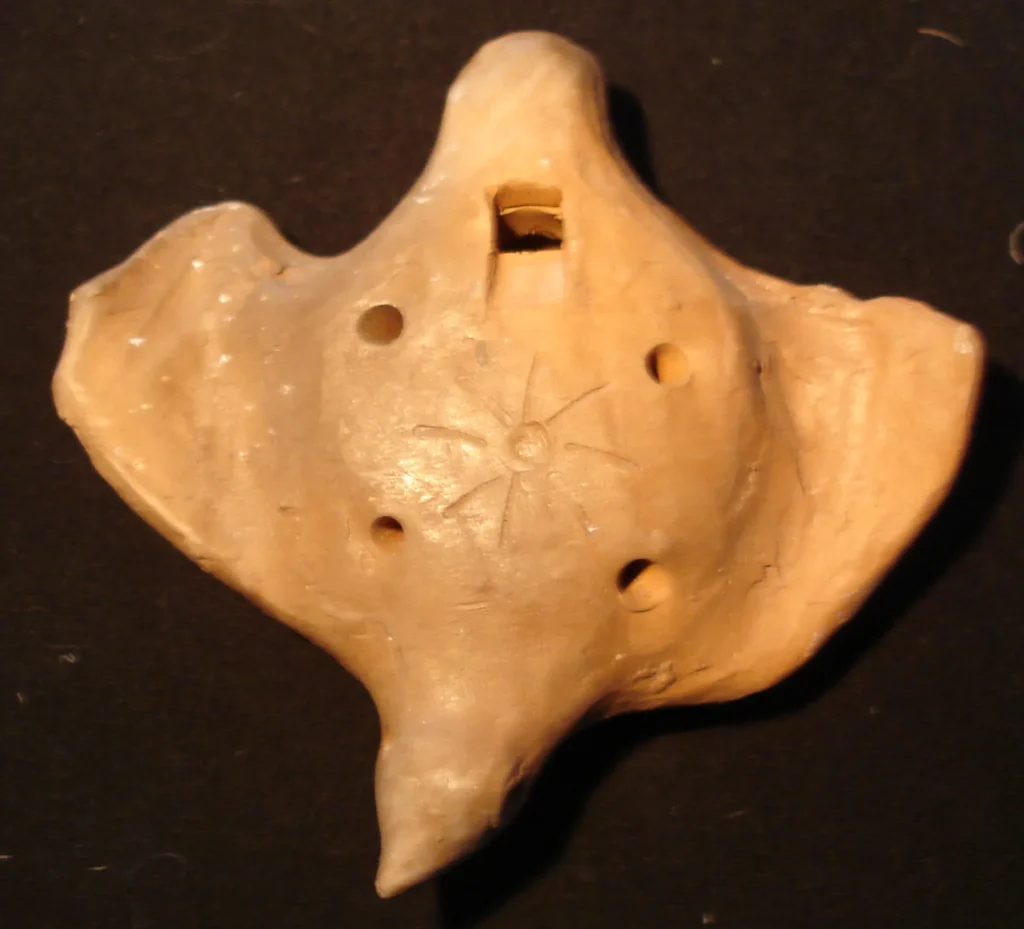
Goal: learn Koji Kondo’s famous theme from The Legend of Zelda step by step. This guide is for beginners and offers a clear way to read sheet music and tablature.
We’ll start with a very easy version in C for a 12-hole ocarina. This community-created arrangement makes one of the game’s iconic melodies more accessible.
The approach is simple: follow a gradual progression, understand the rhythmic structure, then strengthen your playing with focused exercises.
What you’ll find: ocarina preparation, essential skills, how to read sheet music and tablature, fingerings for the theme, playing tips, and ways to continue learning.
Don’t worry: you need no advanced knowledge. We explain each useful symbol step by step so you can start playing quickly and enjoy it.
Before you play: prepare your ocarina and understand the goal of this tutorial
Before you play, prepare your instrument and find a suitable place to practice. Check that the mouthpiece is clean, the holes can be sealed properly, and there is no condensation. These precautions help keep the sound and notes steady.
Choose the right key (C, F, or G) and check the number of holes (12, 10, or 6). Keep the tablature reading conventions in mind: top to bottom, left to right; black holes are covered and white holes are open.
Practice in short, regular sessions: warm up for 5 minutes with long notes, then spend 10 minutes on the main phrase with a metronome set to a slow tempo. An upright posture and relaxed shoulders help you control your breath.
- Quick reading guide: dashes extend the duration (1 dash = 2 additional beats); bars indicate a rest or a breath.
- Useful symbols: parentheses followed by a multiplier indicate a repetition; braces indicate that you should play in one breath.
“Breathe in through your nose, then exhale steadily: a gradual flow of air keeps your pitch stable.”
Practical tip: you only need a few symbols at first. Later, we’ll see how sheet music can clarify note lengths and rests without complicating your routine. This makes progress easier.
Essential skills for playing the Song of Time on the ocarina
Choosing the right model makes learning easier. For beginners, a 12-hole ocarina in C is the best starting point. This model lets you use most of the fingerings shown in community resources.
The key affects how fingerings correspond to notes: C, F, and G are not played the same way. Always check the key shown on the sheet music or tablature before you begin.
The register (bass, alto, soprano) changes the pitch you hear, but not the fingering pattern if the key is the same. The same fingering diagram therefore keeps its shape across different instruments.

How to read tablature at a glance: find the black holes to cover and the white holes to leave open. Watch for bars where you can breathe and braces that indicate a phrase played in one breath.
- Beginner tip: choose a 12-hole model in C.
- Practical tip: practice the phrase in small groups of notes to memorize the fingerings and control your breath.
- Compare sheet music and tablature: check both note length and fingering to improve your rhythmic accuracy.
Song of Time on the ocarina: notes and fingerings
Start by isolating the main phrase in C to make learning easier. On a 12-hole ocarina, the sequence consists of four stable finger positions. Move between them slowly to keep the notes in tune.
Rhythmic pattern and note length
In tablature, dashes extend the length of a note. Count aloud or use a metronome to keep a steady beat.
Example: in a four-note phrase, if the last symbol has two dashes, the last note lasts twice as long without any change in fingering.
Breathing and phrasing
Braces indicate a group played in one breath. Keep the air pressure steady to avoid changes in pitch.
Lift your fingers only slightly to make transitions quiet, and avoid unnecessary movement between positions.
Adapting the theme for 10-hole and 6-hole ocarinas
On a 10-hole ocarina, you may sometimes need to replace a note with the nearest available note and make that compromise clear. On a 6-hole model, the safest approach is to transpose the melody or reduce the motif to its recognizable outline.
- Tip: start slowly and keep a solemn pulse to evoke the atmosphere of the Temple.
- Progression: once you’ve mastered the motif, increase the speed slightly while maintaining good breath control.
How to read and understand sheet music and tablature for this theme
Understanding the connection between sheet music and a diagram of the holes makes practice easier. First, identify the clef, key signature, and time signature on the sheet music, then turn to the tablature.
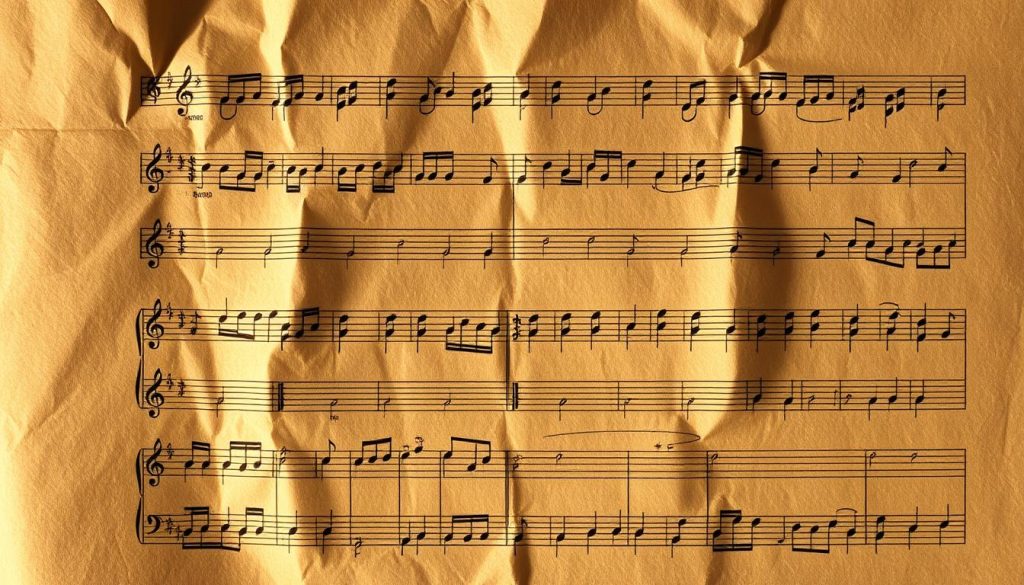
Essential symbols
In tablature, simple symbols show note length and how to play. Dashes extend the duration (1 dash = 2 beats; 2 dashes = 4 beats).
Parentheses followed by a multiplier indicate a repetition. Braces indicate a continuous breath. Vertical bars mark rests, breaths, or visual divisions.
Note values and extensions
Learn the order of note values: whole note, half note, quarter note, eighth note, sixteenth note, thirty-second note, and sixty-fourth note. A dot adds half the note’s value (for example, a dotted quarter note = a quarter note + an eighth note).
Beams group eighth notes; slurs create phrasing without interrupting your breath. For example, a quarter note followed by a dash in tablature often corresponds to a dotted quarter note in sheet music.
- Tip: a layout combining sheet music and tablature shows the direct connection between a written note and its fingering.
- Reading note values aloud before playing helps you remember them.
Playing tips, technique, and progress
For beginners, practice should stay simple and consistent. Work through each fragment slowly, then count it again with a metronome. A steady instrument helps build confidence.

Common mistakes
Unsteady breath: hold a middle-range note for several beats with a metronome to steady the air pressure.
Confusion about the key: check your model before playing so you don’t use fingerings unsuitable for a 12-hole ocarina in C.
Imprecise rhythm: count aloud and use the duration marks as guides.
Practical exercises
- Divide the melody into groups of 2 to 4 notes, then gradually join them together.
- Alternate long sustained notes, simple intervals, and rhythmic phrases from the theme.
- Use “very easy” tablature or resources combining tablature and sheet music to understand note lengths and fingerings.
“Master each step before increasing the speed.”
Goal: play the main motif cleanly, then connect it in one breath. Musical expression matters more than speed.
Zelda context and ways to continue learning
This section places the theme in Zelda’s story to guide what you learn next.

Its main role in Ocarina of Time and Majora’s Mask
In Ocarina of Time, this theme opens the Door of Time at the heart of the temple and lets you move blue blocks.
In Majora’s Mask, it serves as a save point and lets you adjust the time cycle: the inverted version slows it down, while the accelerated version moves it forward.
Iconic songs to learn next
After this theme, practice Zelda’s Lullaby, the Song of Storms, and the Prelude of Light.
Then explore the Minuet of Forest, Bolero of Fire, Serenade of Water, Requiem of Spirit, and Nocturne of Shadow to cover every temple.
Finding reliable sheet music and tablature
Choose annotated community arrangements and documents that combine sheet music and tablature.
- Check the key and number of holes before using an arrangement.
- Start by learning one tune a week to strengthen your memory of the fingerings and phrasing.
- Use recognized sources (Rinku, Just a player) and compare several tablatures.
Conclusion
In short, choose a 12-hole model in C to play this theme on your instrument. Start with simple tablature, then use sheet music to clarify the rhythm.
Practice with a metronome, pay attention to your breath, and keep a steady beat. Connect the segments grouped by a brace for smooth, musical phrasing.
Always check the key and number of holes before learning a passage. With a few basics of music notation, you’ll soon be able to read sheet music and adapt tablature to your instrument.
To improve, practice a little but often, compare your playing with that of other musicians, and explore other melodies (Zelda’s Lullaby, Song of Storms). Then use resources that combine sheet music and tablature to strengthen the link between notes, fingerings, and musical expression.