

This complete tutorial guides you step by step through learning the famous melody on a 12-hole ocarina in C. The goal is clear: read sheet music, master the fingerings, control your breath, and work on vibrato and tempo to capture the emotion of the original version.
This guide is for motivated beginners and intermediate players who want to improve their intonation and musical expression. Recommended equipment includes an ocarina in C, a metronome, headphones, and printed tablature.
The method follows a gradual progression: listening cues, focused exercises for high passages and note connections, then advice on making transitions automatic. You will also find reliable resources and criteria for assessing your own playing.
Ready to start today? For sheet music and an instructional book with videos, see this practical resource: ocarina book and sheet music.
Why learn “My Heart Will Go On” on the ocarina today?
The long, expressive melody provides a thorough exercise in breath control, fingering, and rhythm.
This theme comes from the 1997 soundtrack, composed by James Horner and popularized by Céline Dion’s performance. Its vocal line contains long, emotionally charged phrases, ideal for practicing breath control and shaping the melody.
Why it still appeals: the theme remains instantly recognizable. It motivates practice and sharpens active listening. It is an excellent way to make progress on a modern instrument.
Skills you will develop
You will practice reading tablature fluently, fingering accurately on a 12-hole ocarina, and moving cleanly between registers. Subtle vibrato and soft and moderately loud dynamics help convey the emotion.
Why this piece is technically useful
The long phrases help you stabilize the beginning and end of each note. They let you adjust air pressure and stay in tune in the upper register.
Practical tip: alternate between listening to the original and your own recording. Compare the dynamics, breaths, and small variations.
Share your progress and leave a comment on sheet music platforms to help the community.
Titanic on the ocarina: play “My Heart Will Go On” step by step
Follow a step-by-step method to master note attacks, legato, and tone. Start by choosing a stable instrument: a 12-hole model in C with a comfortable mouthpiece makes high passages easier and reduces air leaks.
Choose your instrument
Look for well-spaced holes and reliable intonation to build confidence on ascending passages.
Read the tablature
Quickly identify covered and open holes, then mark where you will breathe. If the tablature omits the opening, begin cleanly at about 0:20 and steady your breath before the first sustained note.
Technique and musical expression
Connect the main phrase while keeping the airflow steady. Save subtle breath-driven vibrato for long notes. Practice the tempo with a metronome: increase it in stages and use subdivisions.
Put it together and make corrections
Plan breaths between the verse and chorus, and anticipate fingering changes. If the horizontal lines seem unclear, compare the sheet music with what you hear and write corrections directly on the page.
“Anticipate the fingering to avoid sliding between notes, and keep the mouthpiece steady.”
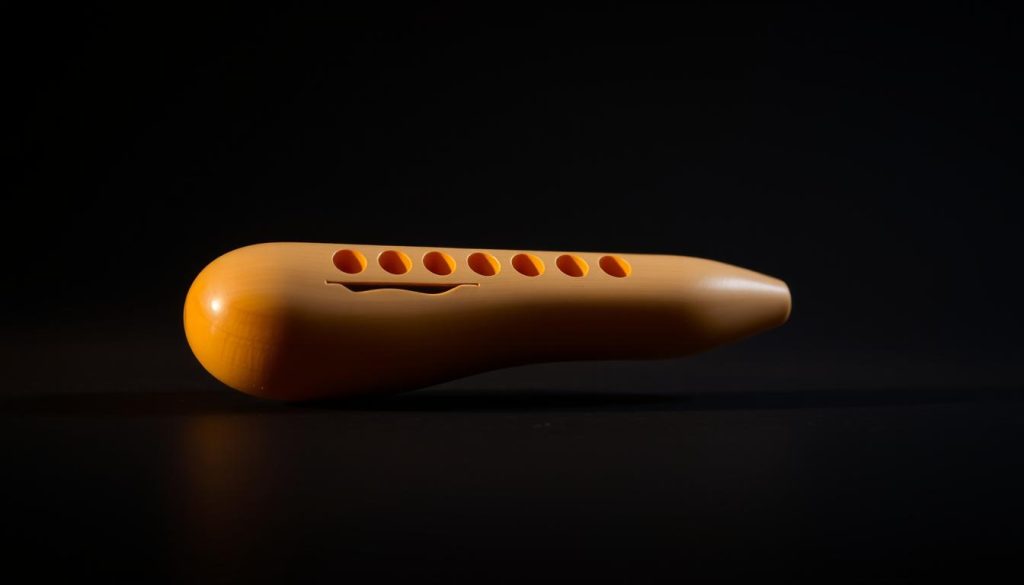
Record your takes, write a brief comment, and compare them to refine your rendition. To learn more about the song’s origins and find resources, see this useful reference on sheet music.
Sheet music, tablature, and useful ocarina resources
This section brings together sheet music, arrangements, and advice to help you find a version suited to a 12-hole ocarina in C.
Where to look: browse the Sheet Music > Film and TV category to find entries related to the theme. Always check the key (C) and compatibility with a 12-hole ocarina.
Notable examples
- black-butterfly (17/04/2013): first public version, in C, difficulty rated “None,” missing opening (start at about 0:20), and possible errors. 3 likes, 0 comments.
- Spipfire (15/02/2016): adaptation for 12 holes (based on Rom2708’s version), with one note added and spacing reduced to make printing easier. 0 likes, 0 comments.
Practical tips
Always compare the sheet music with the original recording (album: Let’s Talk About Love, 1997, Céline Dion) to check the tempo and dynamics.
“I just added one note and reduced the spacing (to make printing easier).”
| Entry | Key | Format | Popularity |
|---|---|---|---|
| black-butterfly (2013) | C | Double / unspecified | 3 likes, 0 comments |
| Spipfire (2016) | C | 12 holes (adapted) | 0 likes, 0 comments |
| Rom2708 (original) | C | Source of the adaptation | Basis for the adaptation |
To take part, create an account: rating a piece and writing a comment require you to sign in. Share your corrections and fingerings to help the community.
Conclusion
Recap: you know how to choose a suitable 12-hole ocarina, read and adjust tablature, place effective breaths, and play the main phrase expressively.
Suggested practice plan: short, regular sessions of 15 to 20 minutes. Work slowly with a metronome, practice the verse and chorus separately, then gradually increase the tempo.
For high notes, practice sustaining notes with subtle vibrato and controlled airflow. Anticipate transitions to avoid sliding between notes.
Develop your expressiveness by marking dynamics and breaths on the sheet music. Choose a reliable version, print the 12-hole adaptation, and update your notes.
Assess your playing each week by recording a take and comparing it with the original. Then explore other film themes to improve your breath control, legato, and musical expression.