
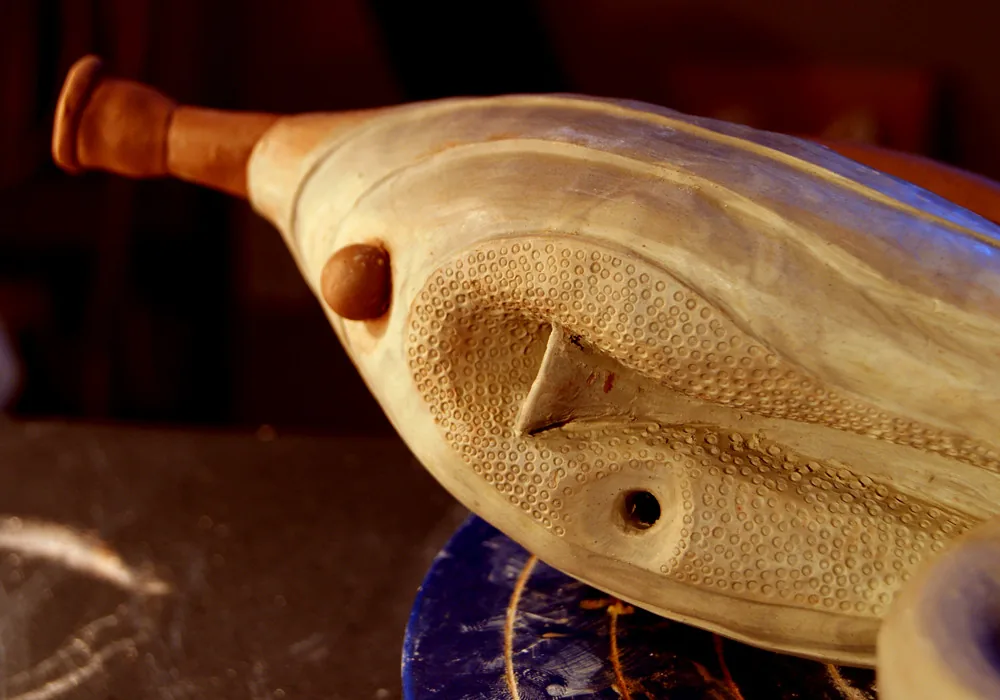
Discover how a small ocarina, simple as it may seem, can become a powerful tool for creating personal music.
This closed-chamber wind instrument produces gentle sounds through breath and the covering of its holes. Models vary (4, 6, or 12 holes), affecting tone and intonation.
We will cover the basics of composition by combining controlled breath, consistent fingering, and attentive listening. You will soon hear how air pressure subtly shapes each note.
Later, the article will explain techniques such as vibrato and glissando to enrich musical phrases. We will also look at materials and designs that help optimize sound quality.
To learn more about the origins and types of ocarinas, see this practical guide: what is an ocarina.
Choosing an Ocarina with the Sound Quality You Need for Composition
Choosing the right ocarina directly affects sound quality and how easily you can imagine musical phrases. The material, number of holes, and precision of construction determine its tone, projection, and intonation.
Materials and sound character:
- Ceramic produces warm sounds and projects well. Porcelain offers exceptional tonal purity.
- Plastic is affordable and durable; wood brings an organic tone but requires more careful maintenance.
- Metal projects strongly, which is useful in concert, but demands better breath control.
Ocarinas generally have 4 to 12 holes: 4- and 6-hole models make learning easier, while 12-hole models offer a wider range and more precise notes. In France, expect to pay €10–40 for plastic, €30–60 for ceramic, €100–300 for wood, and €320–500 for porcelain.
“A well-adjusted instrument reduces intonation errors and makes it easier to write precise motifs.”
Before buying, test its dynamic response, the spacing of the holes against your fingers, and the stability of its tone at different air pressures.
Essential Wind Instrument Basics: Posture, Breath, and Grip
Body control is essential for producing clear, steady notes on this wind instrument. Good posture frees the chest and stabilizes the airflow needed to play.
Good posture and steady hands
Hold the ocarina at chest height, tilted slightly. Keep your shoulders down and your back straight to allow your chest to expand fully.
Keep your supporting hand steady: a secure but relaxed grip prevents you from accidentally covering holes when starting a note.

Use diaphragmatic breathing: inhale deeply, then blow steadily. Blowing too hard makes high notes shrill; blowing too softly makes notes unstable.
Use the angle of your breath for fine adjustment: a slight change can often correct the pitch without changing the pressure.
- Keep finger movements small to improve accuracy and speed.
- Practice holding notes for 8 to 12 beats with a metronome to stabilize your intonation.
- Alternate between low and high notes while keeping the airflow even.
“Once you control your breath, your phrasing improves quickly.”
At the end of a session, relax your neck and shoulders to maintain easy breathing. These basics provide the essential technique for practicing the ocarina and progressing comfortably.
Fingerings and Basic Notes: Building Your Musical Vocabulary
Start by identifying families of fingerings: the logic behind the pitches will then become clear.
Practice common notes first with ascending and descending scales. Play slowly, then increase the tempo once your notes are in tune. Reducing excessive finger movement improves accuracy.
Ocarinas with 4, 6, or 12 holes use different fingering patterns. Learn the low, middle, and high positions so you can visually connect covered holes with note pitches.
- Keep your hand close to the body of the instrument and your fingers close to the holes.
- Practice simple rhythmic motifs to coordinate fingering with the beat.
- Repeat difficult positions for 20 to 30 seconds.
| Type | Range | Fingering pattern |
|---|---|---|
| 4 holes | Limited | Simple, ideal for beginners |
| 6 holes | Medium | A good compromise for playing more notes |
| 12 holes | Wide | More fingerings and greater precision |
“Learn each note as a movement, not as a theory.”
With regular practice in short sessions, you will expand your musical vocabulary. Then try playing a connected sequence of 5 to 7 notes on the ocarina to see whether it sounds coherent.
Composing for Ocarina: Creating Your Own Melodies
Start with a small musical idea: three to five notes are enough to give it character. This starting point makes it easier to remember and vary.

From Idea to Motif
Starting with a short motif lets you experiment with rhythm and note order without losing your way. Change the rhythm or sequence to create subtle, natural variations.
Simple Scales and Modes
Choose an accessible scale, such as a major or pentatonic scale. This makes intonation easier and finger positions more comfortable.
Combine, Vary, Repeat
Use an A–A’–B–A structure: A introduces the theme, A’ transforms it, B creates a contrast, and then A returns. Repetition strengthens the theme’s identity while allowing slight rhythmic variations.
Write and Revise
Write down fingerings, breaths, and dynamics beneath each line. Mark where to breathe so the airflow remains smooth and the phrase stays intact.
| Step | Goal | Practical tip |
|---|---|---|
| 3- to 5-note motif | Memorization | Repeat it in a loop, then change one element |
| Choose a scale | Intonation | Major or pentatonic scale |
| A–A’–B–A form | Clarity | Section B: a different range or rhythm |
| Notation | Revision | Mark fingerings, breaths, and dynamics |
“Mastering breath and fingering turns an idea into a coherent musical phrase.”
To explore the instrument’s history and types further, read what is an ocarina.
Techniques and Effects to Enrich Your Melodies
Small changes in breath and fingering open up many sonic possibilities. By practicing three effects—vibrato, glissando, and staccato—you can add character without complicating the melody.

Vibrato, Glissando, Staccato: How to Play Them
Diaphragmatic vibrato: produce small, regular pulses from the diaphragm on long notes. Use moderate vibrato to color the note without losing intonation.
Glissando: slide your fingers gently over the holes while blowing continuously. Use it between neighboring notes for lyrical, flowing passages.
Staccato: use short, detached bursts of breath to define rhythmic motifs. Staccato clarifies repeated figures and energizes the phrasing.
- Start slowly and increase your speed if the note stays in tune.
- After a glissando, synchronize small pulses of air with your finger movements.
- Practice in short cycles (30 to 60 seconds) and note your settings (width, speed).
- Use a metronome to align the effects with the piece’s beat.
“Controlled vibrato and a well-placed glissando can make a simple note truly expressive.”
Drawing Inspiration from Ocarina Music and History
From ancient clay flutes to modern ocarinas, the history of this instrument offers rich ground for exploration. It connects folklore, classical repertoire, and popular music.

From Tradition to Popular Culture
The Legend of Zelda has made the ocarina famous since 1998. Themes such as the Song of Time and Zelda’s Lullaby are ideal for learning memorable motifs.
These tunes are often technically simple. You can play them on a 12-hole ceramic model to cover their full range.
History, Craftsmanship, and Repertoire
Explore folk repertoire and observe how musicians turn short musical ideas into lively phrases.
- Study ocarinas made of porcelain or ceramic for their intonation.
- Listen to accomplished musicians and imitate them, then adapt their playing for 10 minutes.
- Take common musical turns and incorporate them into your themes.
“Tradition and popular culture offer simple ways to expand your musical vocabulary.”
Conclusion
After a few weeks of focused practice, you will be able to play familiar motifs with confidence.
In summary: posture, breath, fingering, and listening refine your sound. These skills make everyday playing more reliable and help develop musicality.
Here is a simple practice plan: spend 10 to 15 minutes on the basics (breath and long notes), 10 minutes on scales, 15 minutes on motifs, and 10 minutes on effects such as vibrato and staccato.
Care and equipment matter too. Porcelain offers excellent sound clarity but needs careful handling. A case and gentle cleaning help preserve sound quality.
Listen to yourself, record your performances, and adjust where your fingers sit over the holes. With attentive practice, this instrument reveals itself to be highly responsive and rich in nuance.