
Édith Piaf’s grave is a must-visit place of pilgrimage. Every year, nearly three and a half million visitors come to pay their respects. The grave is in division 97, on Avenue Transversale No. 3, second row, in the famous cemetery.
In this article, you will discover the exact location of this iconic grave. You will also learn why it is the most visited and draws admirers from around the world. This practical guide provides everything you need to find the Gassion-Piaf family vault easily.
We will explore Édith Piaf’s fascinating story, her turbulent life and her enduring bond with Paris. You will also learn more about her grand funeral in 1963, which brought nearly half a million people into the streets of the capital.
Who Was Édith Piaf?
Édith Piaf, an icon of French song, left a lasting impression on people in France and beyond. Born Édith Giovanna Gassion on December 19, 1915, in Paris, she was the daughter of a street acrobat, Louis-Alphonse Gassion, and a singer, Annetta Maillard. From childhood, she sang in the streets of Belleville, a working-class neighborhood.
At 16, she left her family and gave birth to a daughter, Marcelle, who died tragically at just two years old. Her career took off when Louis Leplée discovered her and gave her the nickname “La Môme Piaf.” The name would define her life and career, propelling her onto the Paris cabaret stage.
Her Life and Career
Édith Piaf began performing in Pigalle cabarets, where her exceptional talent soon attracted attention. In 1937, at just 22, she triumphed on the stage of the ABC music hall, a turning point in her career. Her signature songs, including “La Vie en rose” (1945), “L’Hymne à l’amour,” “Milord” and “Non, je ne regrette rien,” became timeless classics.
She also played a crucial role in launching the careers of other artists, notably Yves Montand and Charles Aznavour, cementing her status as an influential 20th-century performer. Collaborations with composers such as Marguerite Monnot and Raymond Asso enriched her repertoire and helped her touch the hearts of millions of fans.
Her Ties to Paris and Its Arts Scene
Paris was always at the heart of Édith Piaf’s life. She lived at 67, boulevard Lannes, an address that reflects her deep connection to the city. From Pigalle’s cabarets to major venues such as Bobino and the Olympia, her journey was closely tied to the development of Paris’s arts scene.
She endured personal tragedies, including the loss of her daughter and, in 1949, her great love, Marcel Cerdan. These events shaped her life and influenced her songs, giving them a distinctive emotional depth. She died prematurely in 1963 at the age of 47, leaving an invaluable musical legacy.
“When you’re in love, you can’t help singing.”
Édith Piaf remains an iconic figure whose influence endures across generations. Her story, marked by passion and pain, continues to inspire artists and admirers around the world.
| Event | Date | Place |
|---|---|---|
| Birth | December 19, 1915 | Paris, France |
| Career breakthrough | 1937 | ABC, Paris |
| Recording of “La Vie en rose” | 1945 | Paris, France |
| Death | October 10, 1963 | Grasse, France |
To learn more about this fascinating artist, follow this link.
Père-Lachaise Cemetery: A Place of History and Remembrance
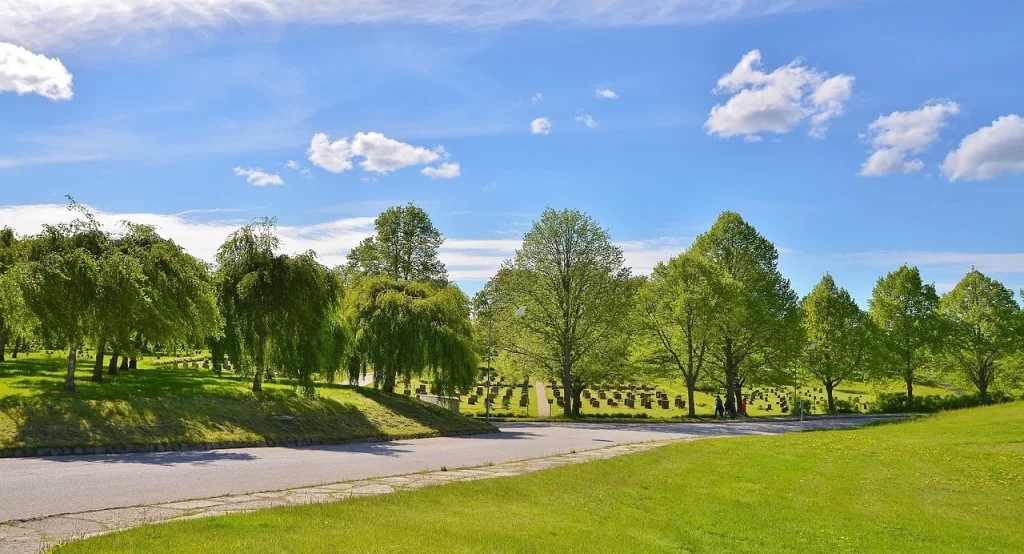
Père-Lachaise Cemetery is much more than a resting place. It is an open-air museum rich in history and culture. Located in Paris’s 20th arrondissement, it covers 44 hectares and attracts nearly three million visitors each year. Founded by Emperor Napoleon in the early 19th century, the cemetery is a symbol of the city and its heritage.
An Overview of the Cemetery
It is the largest cemetery within Paris city limits. Its main entrance is at 8, boulevard de Ménilmontant. Designed as a landscaped garden, it combines funerary art and nature. Its shaded paths invite visitors to stroll and contemplate monuments sculpted by renowned artists.
Over the centuries, the cemetery has held more than a million burials. Among them are many prominent figures from the arts, literature and politics. It has become an essential place of remembrance, filled with emotion and stories.
Cultural and Tourist Significance
Père-Lachaise Cemetery is a popular destination for lovers of history and culture. Every year, millions of visitors explore its paths and discover the graves of celebrities such as Chopin, Oscar Wilde and Jim Morrison. These iconic figures attract admirers from around the world, adding to the site’s appeal.
The cemetery’s richness extends beyond its graves. Cultural events and guided tours also help visitors understand its history. An interactive online map makes it easier to locate graves and facilities, adding to the experience.
In short, Père-Lachaise Cemetery is a place where history and memory meet. It plays an essential role in Paris’s collective memory and is an invaluable part of its cultural heritage.
| Features | Details |
|---|---|
| Area | 44 hectares |
| Annual visitors | 3.5 million |
| Famous figures | Chopin, Oscar Wilde, Jim Morrison |
| Number of burials | More than one million |
| Admission | Free |
For more information about this landmark, follow this link.
Édith Piaf’s Funeral and the Ceremony at Père-Lachaise
Édith Piaf’s death caused an unprecedented wave of emotion in France in 1963. News of her death spread across the country and deeply shocked her admirers. That year, millions mourned the loss of an artist who had touched so many hearts.
Public Grief in 1963
The singer died during the night of October 10–11, 1963, in Plascassier, near Grasse. Her body was secretly brought back to her home on boulevard Lannes in Paris. This marked the beginning of widespread public mourning.
Nearly half a million people gathered in the capital’s streets for the funeral procession. Such a public tribute was unprecedented for an artist of her stature. Admirers lined the route to say a final goodbye to “La Môme.”
The Procession and Burial
On October 14, 1963, she was buried in the cemetery without a religious ceremony, in accordance with Piaf’s wishes. Nearly 40,000 people crowded into Père-Lachaise Cemetery for the moving occasion.
Théo Sarapo, her last husband, cared for her until the end. He saw to her appearance before the coffin was closed. Édith Piaf was buried in the family vault alongside her father, Louis Gassion, and her daughter Marcelle, who had died in 1935.
These grand funeral rites left an indelible mark on the cemetery’s history and showed how deeply millions of French people loved the artist.
| Event | Date | Details |
|---|---|---|
| Death | October 10–11, 1963 | Plascassier, near Grasse |
| Return to Paris | October 11, 1963 | 67, boulevard Lannes, Paris |
| Burial | October 14, 1963 | Père-Lachaise Cemetery |
| People present | 40,000 | At the cemetery |
| Funeral procession | October 14, 1963 | 500,000 people |
To learn more about this memorable occasion, follow this link.
Where Is Édith Piaf’s Grave in Père-Lachaise Cemetery?
For admirers around the world, the vault of this French music legend is a place of remembrance. Édith Piaf’s grave is in division 97 of Père-Lachaise Cemetery, on Avenue Transversale No. 3, second row. The Gambetta gate or Réunion gate is recommended for access.
Division 97 and the Exact Location
The grave is in division 97, in a readily accessible spot. Use these directions to find it: Avenue Transversale No. 3, second row. They will help you reach the right section.
The Gassion-Piaf Family Vault
The Gassion-Piaf family vault is a simple black grave, a striking contrast with the scale of the artist’s career. The inscription “Famille Gassion-Piaf” on the monument reflects her attachment to her family despite her international fame.
Her father, Louis-Alphonse Gassion, who died in 1944, and her daughter, Marcelle Dupont, who died of meningitis in 1935 at just 28 months old, also rest in the vault. Her second husband, Théo Sarapo, who died in 1970, joined her there.
Objects dear to her were placed in her coffin: a stuffed rabbit, a green silk tie, a sailor’s beret and a postcard signed by Jean Cocteau. The grave has become the cemetery’s most visited burial place, drawing admirers from around the world every day.
Follow our advice to find division 97 and the correct row easily, even on your first visit to the cemetery.
| Items | Details |
|---|---|
| Division | 97 |
| Row | Second row |
| Access | Gambetta gate or Réunion gate |
| Inscription | Famille Gassion-Piaf |
| Objects in the coffin | Stuffed rabbit, silk tie, sailor’s beret, postcard from Jean Cocteau |
What Édith Piaf’s Grave Means to Visitors
Édith Piaf’s grave is far more than a resting place. It is a sanctuary for millions of people moved by her voice and her story. Every day, admirers from around the world come to pay their respects, showing the lasting impact she has had on French culture.
The monument has become a place of reflection where visitors leave flowers, letters and personal objects in tribute to the artist. Each gesture expresses affection and respect, illustrating the deep bond between Piaf and her audience.
For admirers, the site holds a powerful emotional connection. It keeps the memory of “La Môme” alive and passes her legacy to new generations. Visiting her grave is an essential experience, as is visiting the graves of the cemetery’s other iconic figures.
The simplicity of the family vault contrasts with the grandeur of Édith Piaf’s career. This contrast moves visitors and strengthens their attachment to the music legend. Her grave thus symbolizes the public’s enduring love for an artist whose timeless songs touched millions of hearts.
Visitors’ tributes and rituals keep the place alive. The flowers and objects they leave reflect an affection that endures. Édith Piaf’s grave plays an essential role in preserving collective memory and French cultural heritage, making her an immortal figure of the cemetery.
| Items | Details |
|---|---|
| Daily visitors | Thousands |
| Objects left behind | Flowers, letters, stuffed toys |
| Cultural significance | A place of remembrance and reflection |
| Location | Division 97, Père-Lachaise Cemetery |
| Accessibility | Free admission; map available |
How Can You Visit Édith Piaf’s Grave at Père-Lachaise?
Visiting Père-Lachaise Cemetery is a rewarding way to discover Paris’s history and pay tribute to its icons. To make the most of your visit, it helps to know the opening hours and entrances.
Entrances and Opening Hours
The cemetery’s main entrance is at 8, boulevard de Ménilmontant, in Paris’s 20th arrondissement. Opening hours vary by season:
- From November to mid-March: Monday to Friday, 8 a.m. to 5:30 p.m.; Saturday, 8:30 a.m. to 5:30 p.m.; Sundays and public holidays, 9 a.m. to 5:30 p.m.
- From mid-March to October: Monday to Friday, 8 a.m. to 6 p.m.; Saturday, 8:30 a.m. to 6 p.m.; Sundays and public holidays, 9 a.m. to 6 p.m.
Practical Tips for Your Visit
Here are some practical tips to help you make the most of your visit:
- Enter through the Gambetta gate or Réunion gate to reach division 97, where the grave is located, more quickly.
- Download a cemetery map before your visit or pick one up at the entrance to find your way among its 70,000 plots.
- Wear comfortable shoes: the cemetery is large and hilly, with many cobbled paths.
- Visit early on a weekday to avoid crowds and enjoy a quieter atmosphere.
- Bring water and a hat in summer, as some paths have little shade.
Guided Tours and Audio Guides
Guided tours and audio guides are available to enrich your visit:
- Self-guided audio tours lasting from 45 minutes to 1 hour 30 minutes are available in English, with offline access and a GPS map.
- Local historians also offer audio guides to famous graves, including Édith Piaf’s.
- Booking ahead is recommended, especially during the busy season, to secure your place.
For current information on opening hours and exceptional closures, consult the pere-lachaise.com website.
| Items | Details |
|---|---|
| Main entrance | 8, boulevard de Ménilmontant, Paris 20th arrondissement |
| Opening hours (November to mid-March) | Monday–Friday: 8 a.m.–5:30 p.m.; Saturday: 8:30 a.m.–5:30 p.m.; Sunday: 9 a.m.–5:30 p.m. |
| Opening hours (mid-March to October) | Monday–Friday: 8 a.m.–6 p.m.; Saturday: 8:30 a.m.–6 p.m.; Sunday: 9 a.m.–6 p.m. |
| Quick access to division 97 | Gambetta gate or Réunion gate |
| Self-guided audio tours | Duration: 45 minutes to 1 hour 30 minutes; in English; offline access |
Other Famous People to Discover at Père-Lachaise
Père-Lachaise Cemetery is a treasure trove of graves belonging to people who shaped the history of art and culture. This landmark attracts visitors eager to pay tribute to famous figures of the 19th and 20th centuries.
Extend your walk by discovering the graves of other artists and writers who left a lasting mark on the city. Among them is the legendary singer and actor Yves Montand. Édith Piaf played a key role in launching his career in 1944, when he opened for her at the Moulin Rouge.
Do not miss the grave of Jim Morrison, the charismatic lead singer of the Doors. His is one of the cemetery’s most visited and most flower-covered graves. You can also admire the monument to Oscar Wilde, the celebrated Irish writer. A glass barrier protects it from the countless kisses left by his admirers.
Pay your respects at the grave of Frédéric Chopin, whose musical genius continues to move people around the world. His heart rests in Warsaw, but his body lies here beneath a mourning muse. Discover the grave of Héloïse and Abelard, the legendary medieval couple whose tragic love story draws romantics from around the world.
The Père-Lachaise crematorium is another remarkable place to visit. The building reflects early 20th-century funerary architecture and houses the ashes of many celebrities. Look for the statue of Édith Piaf, too: another tribute to the artist who forever embodies the spirit of Paris and French song.
Use your visit to explore the miniature Paris that is this cemetery. Every path tells a story, and every grave evokes an extraordinary life. Here is a summary of the famous figures you can discover:
| Person | Notable connection | Location |
|---|---|---|
| Yves Montand | His career was launched by Édith Piaf | Division 97 |
| Jim Morrison | Lead singer of the Doors | Division 6 |
| Oscar Wilde | Irish writer | Division 89 |
| Frédéric Chopin | Polish composer | Division 11 |
| Héloïse and Abelard | Legendary couple | Division 1 |
| Crematorium | Funerary architecture | Near the entrance |
To learn more about the celebrities buried here, follow this link.
Conclusion
The vault of this great musical figure is a place where admirers come to reflect. Located in division 97 of Père-Lachaise Cemetery, on Avenue Transversale No. 3, second row, it is the cemetery’s most visited grave.
It contains the Gassion-Piaf family vault, where her father, her daughter Marcelle and her last husband, Théo Sarapo, also rest. The cemetery is open every day, and its main entrance is at 8, boulevard de Ménilmontant.
Remember the public grief surrounding her funeral in 1963, when her body left her home on boulevard Lannes for its final resting place. Millions of visitors come to this place of remembrance each year to honor one of the greatest artists of the 20th century.
Keep the image of this simple black grave in mind, a symbol of a brilliant life, and discover the other celebrities buried in this legendary cemetery.