

On October 14, 1963, a momentous event took place in Paris. Nearly 500,000 people followed the famous singer’s funeral procession. Etched in the collective memory, this moment showed how deeply the public cared for the iconic artist.
Despite the absence of a religious ceremony, the public’s devotion was palpable. Admirers gathered around Père-Lachaise Cemetery, where the singer now rests. The cemetery has become a place of pilgrimage for those wishing to honor her memory.
This guide explores the circumstances of her death, the funeral procession, and the meaning of this tribute. We will also compare it with other famous funerals. Affection for this icon of French song extends beyond borders, and her voice continues to resonate around the world.
Historical and biographical background: Édith Piaf’s life, health, and death
An icon’s life is more than her career. Édith Piaf, born Giovanna Gassion on December 19, 1915, at Tenon Hospital, led a life rich in emotion. Her journey was marked by success as well as tragedy. She transformed her pain into art, captivating millions of people around the world.
Key moments in Édith Piaf’s life
Édith grew up in difficult circumstances. Her mother, a cabaret singer, and her father, an acrobat, passed on their love of performing. Her personal life, however, was marked by tragedy. The loss of her daughter Marcelle at twenty-eight months old affected her deeply. “Pain is a source of inspiration,” she often said, emphasizing how her hardships nourished her art.
Health problems and her final days
Over the years, her health deteriorated. A serious car accident in 1958 left her with lasting injuries. In the years that followed, she struggled with morphine dependence and underwent liver surgery. In July 1963, pneumonia forced her to retreat to Saint-Jean-Cap-Ferrat and then to Grasse, accompanied by her secretary and her nurse. As the days passed, her condition only worsened.
Her death in Grasse and the return of her body to Paris
On the night of October 10–11, 1963, Édith Piaf died in Placassier, a hamlet near Grasse. Théo Sarapo and Louis Gassier, who were at her bedside, honored her wish to die in her own bed. Her body was taken back to Paris unlawfully, with a fake IV drip used to conceal the truth. Upon its arrival at 67 Boulevard Lannes, her personal physician certified her death. The autopsy revealed a ruptured aneurysm linked to liver failure.
Piaf’s death also had a tragic impact on her friend, the poet Jean Cocteau, who died of a heart attack just two hours after hearing the news. This coincidence underscores the strength of the bond between the two artists.
| Event | Date | Location |
|---|---|---|
| Birth | December 19, 1915 | Tenon Hospital, Paris |
| Death of her daughter Marcelle | July 7, 1935 | Tenon Hospital, Paris |
| Car accident | 1958 | Not specified |
| Death of Édith Piaf | October 11, 1963 | Placassier, near Grasse |
| Death of Jean Cocteau | October 11, 1963 | Not specified |
Édith Piaf’s life remains a moving testament to passion and resilience. Her voice, infused with her sorrows and joys, continues to resonate in the hearts of the French people.
Édith Piaf’s funeral: an immense public tribute
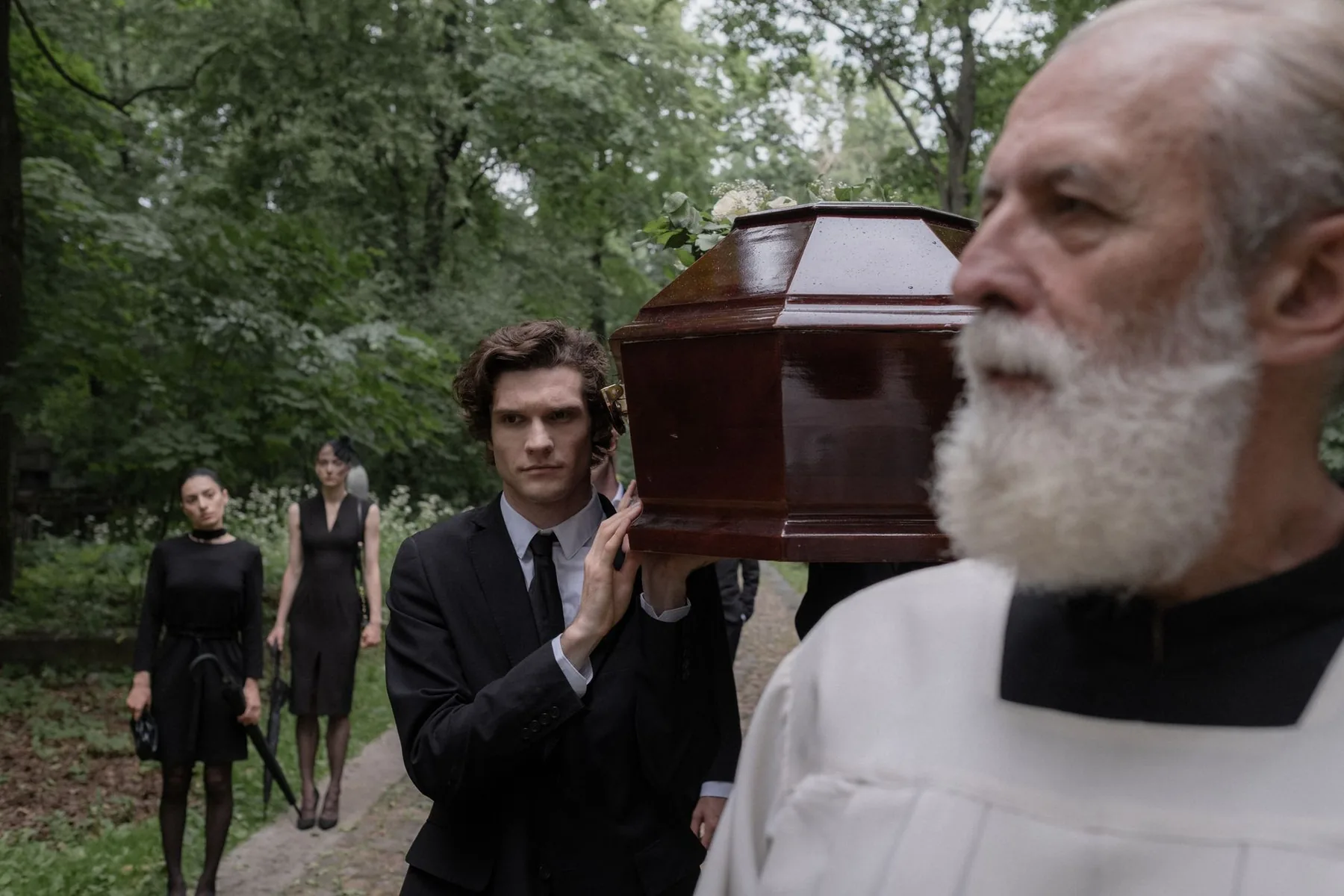
On the morning of October 14, 1963, the funeral procession left Édith Piaf’s home at 67 Boulevard Lannes in Paris’s 16th arrondissement. Its departure marked the beginning of a memorable day on which the city paid tribute to an icon of French song.
The funeral procession through Paris
The procession passed through the streets of Paris, followed by an astonishing crowd of around 500,000 people. This exceptional gathering was one of the largest public tributes to an artist in France. Ordinary admirers and figures from the entertainment world came together to honor the singer’s memory.
The crowd: an extraordinary public gathering
Those present included longtime admirers as well as young people moved by her music. This diversity created a unique atmosphere, showing the profound impact Édith Piaf had on several generations. Newspapers at the time reported the intensity of the occasion, describing an indescribable crush when the procession arrived at Père-Lachaise Cemetery.
The burial site: Père-Lachaise Cemetery and the family vault
The procession reached Père-Lachaise Cemetery, where around 40,000 people gathered near the family vault. Édith Piaf now rests alongside her father, Louis Gassion, and her daughter, Marcelle Dupont, in Division 97, Avenue Transversale No. 3, second row. The site has become a place of pilgrimage for those wishing to pay tribute to her.
Personal belongings placed in the coffin and the absence of a religious ceremony
Her husband, Théo Sarapo, placed objects dear to her in the coffin. They included a stuffed rabbit, a green silk tie, a sailor’s beret, and a postcard from Milly-la-Forêt signed by Jean Cocteau. The gesture symbolized the love and friendship that shaped her life.
Despite the public’s devotion, the Church refused to grant her a religious funeral, regarding her private life as immoral. The absence of a national ceremony did not diminish the scale of the tribute. Théo Sarapo even applied his wife’s makeup and styled her hair before American specialists embalmed her.
Édith Piaf’s grave is now the most visited in Père-Lachaise Cemetery, attracting nearly three and a half million visitors each year. In 1970, she was joined by her second husband, Théo Sarapo, who died in a car accident at the age of thirty-four, sealing their union for eternity.
| Event | Date | Location |
|---|---|---|
| Departure of the procession | October 14, 1963 | 67 Boulevard Lannes, Paris |
| Arrival at the cemetery | October 14, 1963 | Père-Lachaise Cemetery |
| Burial | October 14, 1963 | Family vault, Division 97 |
| Annual visitors | 2023 | Nearly 3.5 million |
| Burial of Théo Sarapo | 1970 | Père-Lachaise Cemetery |
The symbolic meaning of this public tribute
The death of a great artist like Édith Piaf is more than a single event. It evokes deep emotions and vivid memories. The tribute paid to her in October 1963 went beyond a funeral to become a symbol of the French people’s attachment to their culture.
Édith Piaf, a cultural and popular icon
Édith Piaf was more than a singer; she was the voice of an era. Her career, marked by resounding successes, forged her legend. Songs such as La Vie en rose and Non, je ne regrette rien became anthems that touched entire generations. She expressed the people’s joys and sorrows, becoming a true cultural icon.
Her legend rests on her humble beginnings and her ability to rise to the top. This remarkable journey made her an emblematic figure, respected and loved by all.
Édith Piaf’s place in French hearts and in the history of song
Édith Piaf holds a unique place in the hearts of the French people. She embodies the voice of the people and symbolizes genuine emotion. Her songs continue to resonate, recalling an era when French song shone on the world stage.
Her timeless repertoire is a musical legacy that still touches millions. Songs such as L’Hymne à l’amour are classics that endure across eras and generations.
Media coverage and the response from the public and celebrities
Newspapers at the time covered the event extensively, reporting on the emotions of the crowd gathered outside her home. Figures such as Yves Montand and Gilbert Bécaud came to pay their respects. Their presence illustrated the profound impact she had on the artistic world.
Ordinary people came too. They leafed through newspapers and waited quietly for the moment to say a final goodbye. This outpouring showed how cherished Édith Piaf was by the public.
The occasion transcended social and religious divisions. The people gave Piaf what the Church and other institutions had denied her: a tribute worthy of her immense talent.
Édith Piaf’s grave at Père-Lachaise Cemetery has become an essential place of pilgrimage. Every year, millions of visitors come to pay their respects and celebrate her musical legacy.
Comparison with other famous funerals in France and abroad
The funeral of an icon like Édith Piaf can be compared with other notable farewells. These events reveal the public’s attachment to artists who have left an indelible mark on history. Let us look at some of these funerals in France and abroad.
The funerals of Jean Gabin, Jean-Paul Sartre, Serge Gainsbourg, and Coluche in France
Jean Gabin’s funeral on November 17, 1976, caused a frenzy at Père-Lachaise Cemetery. A huge crowd rushed in, exceeding the organizers’ expectations. Shouting and arguments multiplied, and the stewards were completely overwhelmed.
By contrast, Jean-Paul Sartre’s funeral on April 19, 1980, was marked by respectful silence. Around 50,000 people attended the ceremony at Montparnasse Cemetery without a security cordon, reflecting a more intellectual kind of devotion.
Coluche was buried on June 24, 1986, at Montrouge Cemetery. His funeral Mass, celebrated by Abbé Pierre, drew thousands of people, both celebrities and ordinary mourners. At Serge Gainsbourg’s burial on March 7, 1991, admirers brought cabbages and packs of cigarettes, a nod to his artistic world.
Victor Hugo’s state funeral and the tribute to Johnny Hallyday
Victor Hugo received a state funeral on June 1, 1885, an unprecedented event. Two million people followed his procession from the Champs-Élysées to the Panthéon, an all-time record in French history. The tribute reflects his profound impact on French culture.
Likewise, the tribute to Johnny Hallyday in December 2017 recalled that public devotion. Nearly a million fans gathered outside the Church of the Madeleine, underscoring the emotional bond between the artist and his audience.
Funerals marked by immense public devotion abroad: Elvis Presley and Oum Kalsoum
Abroad, Elvis Presley’s funeral on August 18, 1977, drew 100,000 admirers to Memphis. The occasion left a lasting impression, reflecting the worldwide influence of his music.
Oum Kalsoum, an iconic figure of Arab music, brought at least three million people into the streets of Cairo on February 5, 1975. It remains the world’s largest public gathering for an artist’s funeral.
Seen alongside these events, Édith Piaf’s funeral stands out. Without a state funeral or religious ceremony, it prompted a spontaneous gathering of the people of Paris. This tribute to an iconic singer shows her lasting impact on her era and on future generations.
Conclusion
The way the public gathers to honor an iconic figure speaks to that person’s lasting influence. Édith Piaf’s funeral marked a turning point in the history of French song. Nearly 500,000 people filled the streets of Paris, showing the people’s deep affection for the artist.
The occasion gave Piaf the recognition that institutions had often denied her. Her grave at Père-Lachaise Cemetery has become the most visited there, drawing nearly three and a half million visitors each year. Her musical legacy continues to resonate around the world and touch new generations.
In short, the event set a pattern for public tributes, inspiring other gatherings in honor of beloved figures such as Johnny Hallyday. Édith Piaf remains a timeless legend of French culture.