
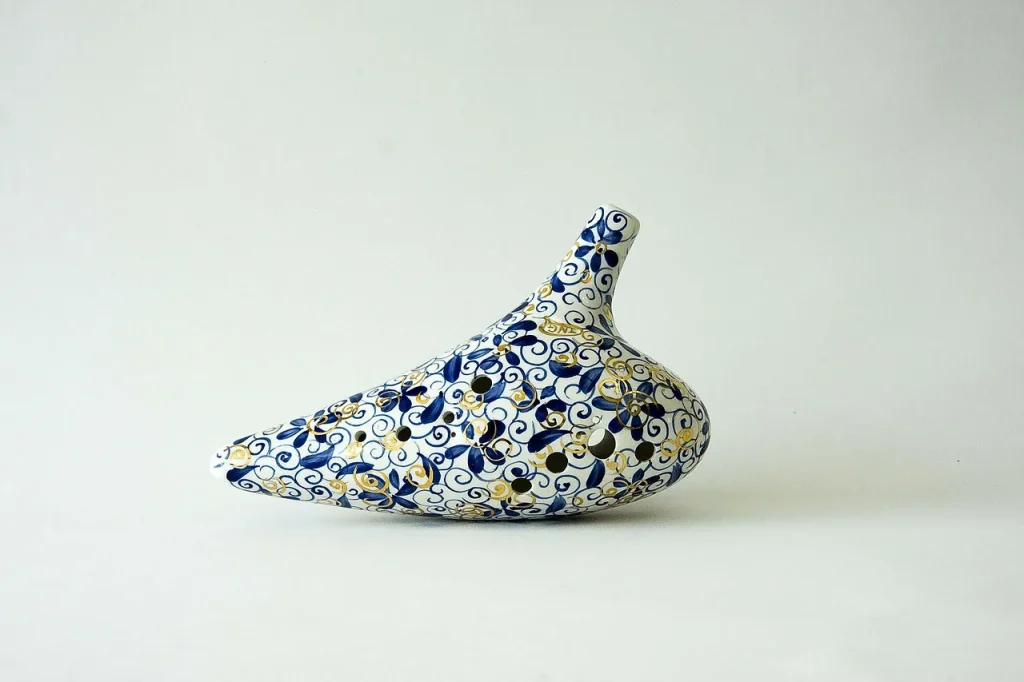
Here is a guide to learning to play this instrument step by step. It provides a clear path to quick progress without jargon.
Why choose it? Its compact size and intuitive handling appeal to beginners. A 12-hole model in C is recommended for its simplicity and the abundance of online resources.
We will cover visual formats (black and white holes, dashes, parentheses) and simplified standard sheet music. You will then be able to read notes and play your first melodies.
This guide focuses on practice and helps you avoid common mistakes, such as poorly tuned instruments or unsuitable sheet music. To learn more about reading music, see this tutorial.
Benefits: expand your repertoire, improve your breath control and coordination, and gain access to centuries of music.
Why start playing the ocarina today, and what you will learn
Starting today lets you make quick progress through clear instruction and short exercises. Within a few weeks, daily practice and a metronome can be enough to play simple melodies.
Reading sheet music encourages independence and communication with other musicians. Reading notes opens up a wide repertoire, from traditional tunes to video game themes, and strengthens your musical memory.
The benefits are tangible: better coordination, improved concentration, and cognitive gains observed among regular players.
The ocarina is a compact, portable wind instrument that requires moderate breath pressure. It suits all ages and helps beginners learn to play pieces quickly.
- Basics covered: notes, symbols, and keeping time with a metronome.
- Breathing technique: diaphragmatic breathing for a steady sound.
- Practical goal: choose an instrument, avoid purchasing pitfalls, and read sheet music to play your first melodies.
Choose the right beginner ocarina with confidence
The right key and range determine note accuracy and whether fingerings match your sheet music. Before buying, check that the key (C, F, or G) matches the music you plan to use.
If the key and sheet music differ, reading becomes difficult, and 35% of students give up. Accuracy starts with a well-tuned model.
Keys and fingerings
An instrument in C, F, or G does not use the same fingerings. Choose a key that matches your sheet music.
Number of holes and difficulty
Four- and six-hole models suit very simple melodies. The 12-hole model covers the chromatic scale and uses standardized fingerings.
Range and materials
A soprano suits high notes, an alto is versatile, and a bass produces low tones. Ceramic offers a warm sound but is fragile. Plastic provides the durability needed for learning.

| Feature | 4 to 6 holes | 12 holes (alto in C) |
|---|---|---|
| Repertoire | Limited | Full scale |
| Difficulty | Low | Moderate |
| Resources | Few | Abundant (89%) |
| Buying advice | For trying it out | 12-hole alto in C recommended |
Reliable brands: STL Ocarina, Night by Noble, Songbird. Recommended store: Musique de Terre. Check the tuning with a tuner as soon as your instrument arrives to avoid surprises.
Understand music notation for the ocarina
Choosing the right format starts with knowing the available systems. Each notation guides your fingers and breath. Learning to read them helps you play more melodies with confidence.
Simple tabs: visual diagrams, timing, and repeats
This system shows which holes to cover and how long to play each sound. Black holes are covered; white holes are open. Dashes extend a note; parentheses and multipliers indicate repeats.
Braces indicate that you should play in a single breath. This is ideal for learning without knowing how to read a staff.
Simplified standard sheet music: note lengths and rests
Adapted versions use the treble clef and note values (whole notes, quarter notes, eighth notes). Rests (quarter rests and half rests) shape the phrasing.
Learning these signs lets you manage timing and breathing accurately.
Hybrid formats: precise notes and fingering diagrams
Mixed formats show the exact note with a fingering diagram above it. Eighty-two percent of beginners prefer them because they improve pitch accuracy more quickly.
Part’Ocarina lets you create versions adapted to your instrument and its number of holes.
Example: compare a short line in visual notation with its version on a staff to see how they complement each other.
Read ocarina tabs step by step
Reading a line starts with identifying the symbols and turning each diagram into finger movements. Black means a covered hole; white means an open hole. A dash extends the note; multiple dashes lengthen it according to the measure.
Essential symbols
- Parentheses and multipliers: repeat a pattern without losing the beat.
- Braces: play in one breath to maintain the connection and musical flow.
- Rests: take care not to confuse a quarter rest with a half rest (one beat versus two beats).
Rhythm and breathing
Study each line before playing. Note the fingering changes and mark where to take a breath.
Practise with a metronome, looping two to four measures at a time. Start slowly, then increase the speed once your notes are consistently accurate.

To go further, see this practical guide: how to read sheet music.
Ocarina tabs for beginners: 10 easy tunes
Here is a selection of simple pieces for practising breath control, fingerings, and rhythm on a 12-hole ocarina in C.
Au clair de la lune — use a very slow tempo to steady your breath and hold each note before speeding up.
Quick tips for each piece
- Frère Jacques — repeat the patterns to strengthen hand coordination.
- Greensleeves — use a hybrid version (sheet music and diagrams) to work on phrasing and slurs.
- Zelda’s Lullaby — start with visual notation, then gradually raise the metronome tempo.
- Happy Birthday — practise crisp starts and smooth note changes.
- Ode to Joy — pay attention to slurs and rests to create a singing melodic line.
- Scarborough Fair — work on subtle changes in breath pressure and keep sustained notes steady.
- Hymn of the Fayth — ideal for an alto or bass and sustained notes; practise diaphragmatic breathing.
Practical tip: check that your sheet music is intended for a 12-hole model in C. If a line goes beyond its range, transpose it by an octave to keep the fingerings usable.
| Piece | Skill to practise | Range |
|---|---|---|
| Au clair de la lune | Breath, timing | 12 holes (C) |
| Frère Jacques | Repeats, coordination | 12 holes (C) |
| Zelda’s Lullaby | Visual reading, metronome | 12 holes (C) |
To improve your reading and adapt your sheet music, see how to read sheet music.
A practice method for quick progress
A structured method turns short daily sessions into tangible progress. Follow a simple routine to improve your pitch, breath control, and sense of time.
Suggested routine
Structuring each session helps you stay on track and measure your progress.
- 5 minutes of warm-ups (mouthpiece and fingerings).
- 10 minutes of C major scales at 60 BPM to align your timing and notes.
- 15 minutes on one piece, breaking it into sections if necessary.
- 5 minutes to review and take notes on your progress.
Breath, posture, and technique
Gauge your breath with the candle exercise: blow without extinguishing the flame, then apply the same pressure to the instrument.
Adopt the “tree” posture to free your diaphragmatic breathing and steady your playing through long phrases.
Practise a gentle diaphragmatic vibrato on sustained notes without sacrificing pitch accuracy.
Practical tip: start with 15 minutes a day and gradually increase the duration. Record yourself, and raise the metronome tempo in steps once your playing is accurate.

For guided exercises and teaching resources, see how to learn to play easily.
Reliable sources for beginner sheet music and tabs
Finding resources sorted by difficulty makes your progress more dependable. Start with two or three sites, then expand your library as your skills grow.

Sites and tools
STL Ocarina offers more than 300 pieces of sheet music sorted by difficulty. It is ideal for choosing melodies suited to your model.
Part’Ocarina lets you edit hybrid sheet music and tabs and adjust each note’s accuracy for your instrument.
OCTalk is a useful forum for asking questions, sharing recordings, and checking a fingering system.
Books and song collections
Ocarina Method Book 1 contains progressive exercises and audio support. The Zelda Songbook provides motivation through familiar themes. Traditional Airs expands your folk repertoire.
Stores and buying advice
Buy from Musique de Terre, Songbird, or Night by Noble. When your instrument arrives, check its tuning, key, and compatibility with your resources.
| Resource | Benefit | What to check |
|---|---|---|
| STL Ocarina | Catalogue by level (more than 300 pieces) | Key and number of holes |
| Part’Ocarina | Customizable editor | Fingering accuracy |
| OCTalk | Community and feedback | Audio examples and comparisons |
| Books (methods and song collections) | Structured progression | Included audio support |
Tip: use the Google search “filetype:pdf ocarina” to find free sheet music, but check the key and number of holes before printing.
Avoid common pitfalls and correct mistakes
A quick check of the tuning and range can save hours of frustration. Before each session, use a tuner and compare reference notes. This helps preserve pitch accuracy and sound quality.
What to watch for
- Confirm the key: make sure the sheet music matches your instrument’s key so the fingerings remain accurate.
- Check the model’s number of holes: a resource for a 12-hole model cannot be used unchanged on a six-hole model; look for the label “12-hole model in C.”
- Test the tuning: when your instrument arrives, play reference notes with a tuner. A consistent discrepancy may indicate a defective or poorly tuned instrument.
Practical solutions
Transpose by an octave if a note exceeds the instrument’s range. Slow the tempo and break phrases into sections if they are beyond your current level.
For example, a tune in G will sound wrong on an instrument in C if you do not transpose it. Write down your transpositions and alternative fingerings so you can use those corrections again. Finally, avoid poorly tuned low-end models and favor established stores to help ensure the instrument lasts and plays accurately.
Conclusion
Final recommendation: to get started, choose a 12-hole model in C. It offers the best compatibility with learning resources and makes notes easier to learn.
Alternate between tabs, standard sheet music, and hybrid versions. Using all three strengthens your reading and sense of rhythm.
Practise regularly with a metronome and breath exercises. Pay attention to your posture and diaphragmatic breathing to steady your playing.
Consult reliable sources such as STL Ocarina, Part’Ocarina, Musique de Terre, and OCTalk. Always check the key and tuning before playing to avoid frustration.
Get started: choose your wind instrument, download a few pieces of sheet music, and begin your musical journey today.