

Singing is part of our lives long before we realize it. From childhood, it finds its way into nursery rhymes, games and lullabies. In adolescence, it becomes a way to express and assert ourselves.
Later, it can offer relaxation, artistic exploration or personal growth. The question, then, is less whether there is a perfect age to start than how to adapt singing lessons to each stage of life. Read on to learn more!
Ages 4 to 6: singing lessons for musical discovery
At this age, your child has a surge of sensory and creative energy that makes them ready to explore music. There is no need for rigid technique or impressive performances. Your little one can simply play with their voice as if it were a fascinating new toy. Activities include:
- funny sounds,
- playful echoes,
- memorable nursery rhymes.
In small-group sessions of about 30 minutes, children develop their musical ear and auditory memory. Singing becomes an educational game that also stimulates their breathing, articulation and coordination.
These sessions feel more like shared moments of enjoyment than formal lessons. They involve nursery rhymes, vocal games, imitating sounds and discovering rhythm with simple percussion instruments.
Ages 7 to 9: the first formal lessons
From age 7, children can begin learning technical basics while keeping lessons playful. Teachers introduce essentials such as rib and diaphragmatic breathing, diction, pitch accuracy and vocal dynamics.
Sessions of 30 to 40 minutes help children:
- develop their musical ear,
- refine their sense of rhythm,
- lay the foundations for healthy vocal technique.
The aim is to give children a solid foundation for future development, without focusing on performance. Singing can also build their confidence and help them learn to sing in harmony with others.
For personalized support, singing lessons at home may be helpful. Specialized platforms offer this option, allowing students to learn gradually at a pace that suits them.
Ages 10 to 12: give singing lessons more structure
This period marks a turning point in your child’s vocal development. Their voice grows more stable, their concentration improves and their sense of rhythm becomes sharper. It is a good time to expand their learning with:
- simple singing in harmony;
- reading rhythms;
- gentle vocal onsets;
- head voice placement…
Between ages 10 and 12, a child’s voice reaches a degree of stability that makes it easier to approach singing. Consider weekly 45-minute sessions, complemented by 10 to 15 minutes of gentle practice at home.
This regular practice will help them explore their voice safely. The goal is to acquire foundations that will allow them to tackle more demanding repertoire later, rather than to focus on performance.
Ages 12 to 15: learn to manage a changing voice with care
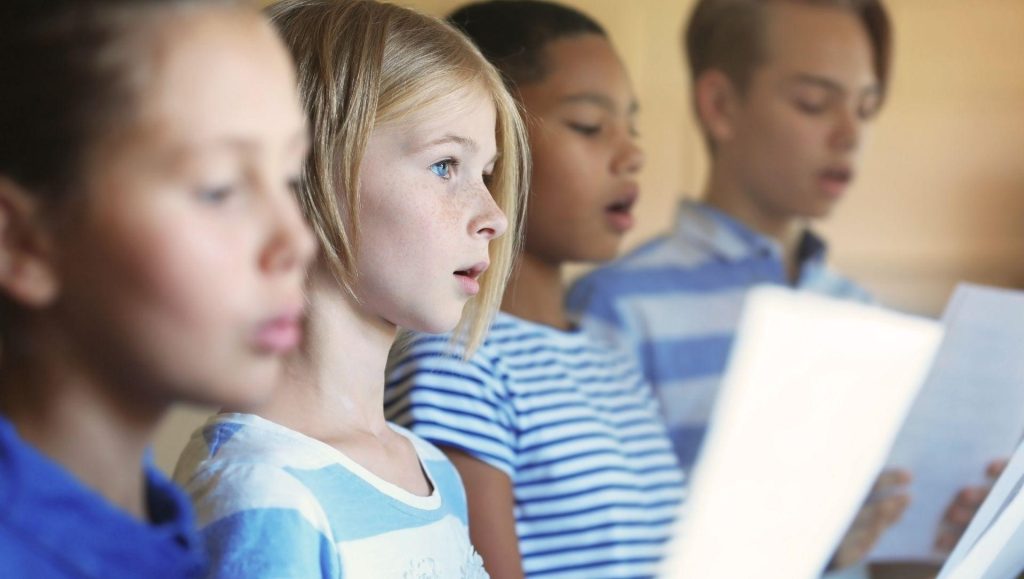
Adolescence brings significant vocal changes. The voice can become unsettled and shift between registers. Lessons should protect and guide this vulnerable instrument. A teacher experienced in supporting students through voice change will emphasize:
- posture,
- breath control,
- semi-occluded vocal exercises,
- releasing tension.
The aim is to support young singers as they develop, build their confidence and give them room for artistic expression, without pushing for power or performance.
Build stability and technique from age 16
From this age, the voice begins to reveal its distinct character after the changes of puberty. This stability makes more ambitious vocal work possible. Teenagers now have valuable skills, including:
- good control of their breathing,
- well-developed body awareness,
- a greater ability to concentrate.
This is the time to work on resonance and mixed voice, develop agility and build vocal stamina. Lessons can also include microphone technique and stage preparation. To make effective progress, it is advisable to work with a singing teacher who can adapt their methods to the student’s vocal maturity and goals.
What about adults and older people?
There is no age limit for singing. Whether you are 30, 50 or 75, your voice remains a living instrument that can develop and grow richer. Adults even have an advantage: more developed body awareness and analytical skills.
Individual or group singing lessons can improve breathing, develop posture and help release emotions. They can also support memory, reduce stress and create opportunities to connect with others. With regular lessons and gentle practice at home, you can make progress at any age, whether you want to relax or perform more demanding songs.