
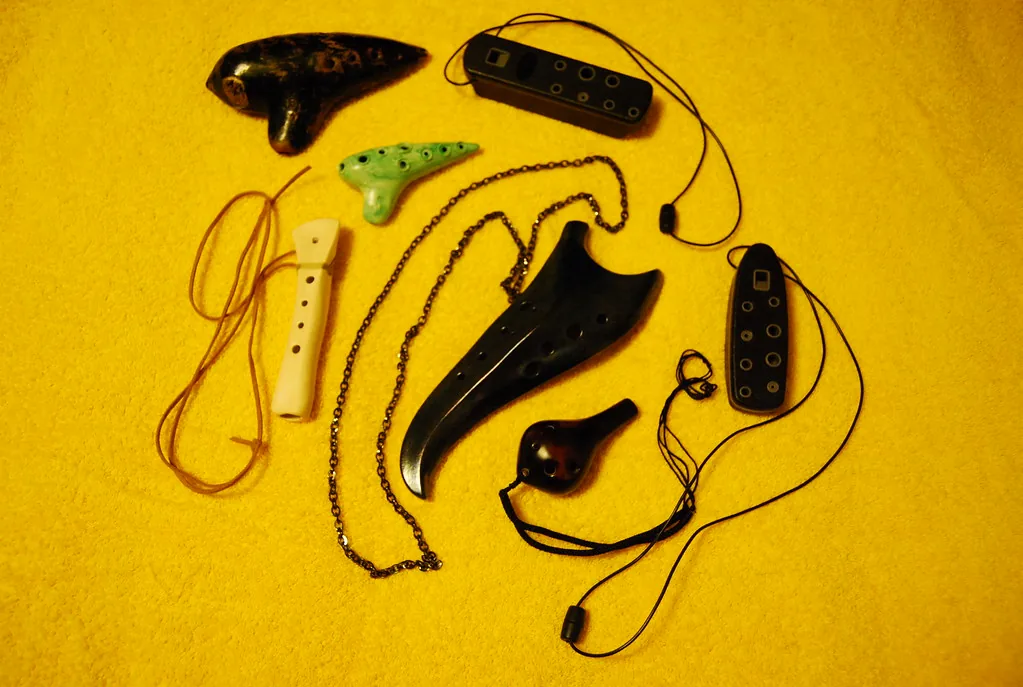
Goal: this article helps novice musicians understand the ocarina, compare models, and make an informed purchase.
A good first instrument prevents the frustration caused by poorly tuned models. Very cheap instruments sold on marketplaces often sound out of tune and hinder learning. Choose specialist sellers to avoid these pitfalls.
The key recommendation for any beginner is a 12-hole alto ocarina in C (AC/C3). This format covers up to 21 notes and works well across many musical styles.
Here we assess the number of holes and notes, key, range (soprano, alto, bass), materials (ceramic or plastic), fingering, ergonomics, brands, and budget. An instrument tuned to A440 makes it easier to play with other musicians and use online tutorials.
To guide your purchase, explore reliable brands such as STL Ocarina, Songbird, Dinda, and Musique de Terre. For more practical details and recommended models, see these tips for choosing your first ocarina.
Why the ocarina appeals to beginners in 2025
Today, the ocarina attracts new musicians with its simplicity and expressive character. This ancient musical instrument has enjoyed renewed popularity for more than twenty years, helped in particular by iconic video game themes such as those from The Legend of Zelda.
Accessible and enjoyable, this wind instrument has a soft, mellow sound. It is quick to get started with, making playing rewarding from the first few sessions.
Portability matters too: light and compact, it is ideal for practicing anywhere and during short sessions. Most beginners also appreciate its ergonomics, which make rapid progress easier.
Budgets range from about $20 to more than $200, depending on the material and brand. In France, choose specialist websites and brands known for instruments that play in tune. Many people prefer to invest once instead of replacing their instrument later.
Popular models such as the Night by Noble are praised for their durability and stable intonation. The worldwide online community also offers plenty of tutorials and tablature, reducing the time it takes to play your first melodies.
Understanding the wind instrument: holes, notes, and range
The arrangement of the holes determines the fingering system and the instrument’s range. More holes provide more combinations and playable notes.
Number of holes and notes: a 6-hole model offers up to 17 notes, making it ideal for children and small hands. A 12-hole model covers up to 21 notes and becomes the standard teaching choice for players over five.

Registers: the soprano is high-pitched and often less expensive, but its sound is more piercing. The alto offers the best balance for most beginners. Bass and contrabass models produce deep low notes but are bulky and costly.
Single chamber or multiple chambers
Instruments with multiple chambers (double, triple, or quadruple) extend the range without requiring another instrument. A double chamber is often enough to reach about two octaves, depending on the hole arrangement.
Be aware that fingering varies between multi-chamber systems. Moving between chambers 1 and 2 can change the tone if the holes are not made consistently.
- Design: inline and globular models are available; most beginners start with a transverse globular model.
- Tuning: choose an alto in C (AC = C3). Some brands use “Tenor in C” for the equivalent instrument.
Practical guideline: a 12-hole alto in C remains the standard teaching choice for playing a full scale and a variety of melodies.
The essential criteria for choosing well
Tuning, ergonomics, and the quality of the holes determine playability from the first lessons. Choose an alto in C (AC/C3) tuned to A440: it offers a full range and works with tutorials and ensembles.
Tuning and intonation
Check that the instrument follows the A440 reference so it matches sheet music and instructional videos.
Ask for confirmation of A440 tuning or listen to audio demonstrations from specialist makers.
Ergonomics and fingering
Check that the spacing between holes suits your hand size and playing level. Holes that are too close together can tire your fingers.
The comfort of the mouthpiece, weight, and grip affect breath control and accuracy.
Build quality and warning signs
Inspect the holes: even edges, an airtight chamber, and no air leaks help the high notes sound reliably.
Avoid cheap marketplace models if their notes are unstable or out of tune.
- Practical tip: choose a 12-hole alto in C if possible; otherwise, select a well-tuned 6-hole model for small hands.
- Quality check: specialist brands often provide consistent tuning and reliable demonstrations.
Ocarina types and fingering systems: getting started with the right choice
The format and fingering system directly affect how quickly you learn and which music you can play. A suitable model prevents frustration and helps you progress.

6 holes or 12 holes
6 holes: about 17 notes; 12 holes: about 21 notes. The 6-hole model appeals because it is simple and quick to learn.
The 12-hole model offers a wider range, smoother transitions, and a broader repertoire. It remains the standard recommendation except for very small hands.
Multiple chambers: double, triple, and quadruple
Multi-chamber models extend the range without requiring several instruments.
- Double, triple, or quadruple: more notes and expressive possibilities.
- Assess these models according to your goals: simple melodies or complex arrangements.
Asian or Pacchioni fingering
Asian fingering extends the first chamber to maximize the number of notes with fewer chambers.
The Pacchioni system uses overlapping ranges between chambers to achieve a consistent tone. For example, a double model may be enough for two full octaves with Asian fingering, while a triple is preferable with the Pacchioni system.
Practical tip: start with a single-chamber, 12-hole model, then move to a double or triple if range and sound quality matter to you. For resources and comparisons, see this information.
Materials and tone: ceramic or plastic ocarinas
The choice of material changes the playing experience and the resulting sound. It affects tone, projection, and how the instrument feels in your hands.

Ceramic: warmth, projection, and appearance
Ceramic ocarinas offer a warm sound and excellent projection. Artisan brands such as Gosselink, Dinda, Spencer, Songbird, and Focalink/Stein often pay close attention to glazing and design.
Advantage: a rich tone and an appearance prized by collectors. Disadvantage: fragility and a generally higher price.
Plastic: durability and value for money
Modern plastic ocarinas, such as the Night by Noble AC, are durable and provide stable intonation.
They suit travel, lessons, and young players. A nonslip surface, a hole for a strap, and an included fingering chart make them particularly practical.
- Comfort in the hand: plastic is lighter and less slippery; ceramic is denser.
- Quality: accurate intonation should come first, whatever the material.
- Tip: choose ceramic if tone is your priority; choose plastic if you want a practical, durable instrument.
Buying guide: choosing an ocarina for beginners
The best balance combines comfort, accurate intonation, and a useful range.
The best all-around choice
A 12-hole alto in C (AC/C3) covers up to 21 notes. Its range lets you play most beginner and intermediate melodies.
This format is comfortable for most hands and matches common tutorials. Standard A440 tuning also makes it easier to play with others.
When to choose a 6-hole model
A 6-hole model offers about 17 notes. It remains ideal for children and very small hands.
It simplifies fingering and encourages quick, enjoyable daily practice. A good, well-tuned 6-hole model can serve you well before you move to a more advanced instrument.

How to avoid pitfalls
Be wary of general marketplaces, where many models are poorly tuned.
- Warning signs: an unusually low price, vague descriptions, and no mention of A440.
- Checks before buying: C tuning, brand reputation, user reviews, audio samples, and visible ergonomic details such as hole spacing and weight.
Practical tip: choose a 12-hole alto in C if possible. If your hands are very small, start with a reliable 6-hole model, then consider upgrading instead of making several disappointing purchases.
Recommended beginner models: quality and reliability
This selection aims to balance durability, intonation, and budget. The following models meet common needs: portability, a stable sound, and a choice of ceramic or plastic according to your priorities.
Night by Noble AC (plastic)
Strengths: light weight (about 150 g), a rubberized finish, a hole for a strap, and an included fingering chart. Its clear, gentle sound is ideal for travel.
STL Ocarina Alto C (ceramic)
Strengths: an extensive catalog (dragon and phoenix designs, Zelda editions), consistent quality, and a professional sound. Prices are around €50–€60; shipping from the United States may involve extra charges.
Other notable models
- OcarinaWind “Forest Whisper”: a 12-hole ceramic model with a “straw fire” finish, supplied with a strap, tablature, and a bag; its high notes are easy to produce.
- Dinda (Etsy): handcrafted models with a gentle sound and attractive prices; availability varies.
- Focalink/Stein via Ocarina World: distribution in France, altos in C from about €42, and easier access to local after-sales service.
| Model | Material | Indicative price | Main advantage |
|---|---|---|---|
| Night by Noble AC | Plastic | About €30–€45 | Durable, portable, good intonation |
| STL Ocarina Alto C | Ceramic | About €50–€60 | Wide selection, professional sound |
| OcarinaWind “Forest Whisper” | Ceramic | About €45–€60 | Accessories included, easy high notes |
| Dinda (Etsy) | Ceramic | About €30–€40 | Handcrafted, good value for money |
| Focalink/Stein (Ocarina World) | Ceramic or plastic | From about €42 | Distribution in France, local after-sales service |
Deciding factor: choose an instrument with excellent value for money, reliable intonation, and immediate comfort. If you are undecided, choose plastic for portability and ceramic for tone.
Where to buy a reliable ocarina in France and online
Choose shops that provide clear information about tuning and returns. This helps avoid unpleasant surprises and makes it easier to get support if the instrument arrives out of tune.
International options
STL Ocarina (United States) offers an extensive catalog and special editions; allow about 10 to 15 days for delivery, with possible additional fees and customs duties depending on your order. Songbird offers ceramic models and Zelda replicas. Noble distributes the Night by Noble AC, a particularly durable plastic model.
Popular artisans and brands
In France, Musique de Terre (Olivier Gosselink) makes high-end instruments by hand. Dinda (Etsy) offers an excellent balance of sound and price. Spencer (United States) remains a reference for luxurious finishes.
Distributors and practical advice
Ocarina World distributes Focalink/Stein in France, with altos in C from about €42; its advantages include after-sales service and short delivery times. Buying from the United States broadens your choice but adds about 10 to 15 days, shipping costs, and taxes.
Tip: listen to demonstrations, read the returns policy, and check for AC/A440 before buying an ocarina online. A clear product description and good customer service are excellent signs.
Budget, value for money, and brands: how much should you spend?
Setting a clear budget helps you choose between practicality and the tone you want.
As a guide, a reliable plastic model costs around €40–€50 (Night by Noble AC). Ceramic ocarinas from established brands (STL, Focalink/Stein) often start at €42–€60.
High-end handcrafted pieces (Spencer, limited editions) regularly exceed these ranges.
How to assess value for money
Check A440 intonation, the consistency of the high notes, and the finish around the holes. These are concrete signs of quality.
Useful accessories such as a case, strap, or fingering chart add value, as does access to after-sales service.
| Price range | Examples | Advantage |
|---|---|---|
| About €40–€50 | Night by Noble AC | Durable, practical |
| About €42–€90 | STL, Focalink/Stein | Better intonation and tone |
| €90 and up | Spencer and handcrafted models | High-end finish, rich sound |
Practical tip: spending a little more often prevents a second purchase. Buy from a reputable brand and a seller that provides clear information about tuning and after-sales service.
Getting started: fingering, breath, and learning resources
Breath control and a comfortable grip speed up progress from the first practice sessions.
Posture and grip: hold the instrument at an angle of about 45°. Keep your back straight and your fingers slightly curved so they fully cover the holes.
Blow gently and control the start of each note. Practice sustained notes and slow scales to steady the high notes and make your vibrato more even.
Short routines and a plan for progress
Practice for 10 to 15 minutes at a time: scales, intervals, and a few simple melodies. Record yourself to spot notes that are out of tune and track your progress.
Start with easy pieces, then gradually increase your speed and extend your range. Regular practice is more useful than long, irregular sessions.
Reliable resources
Use YouTube channels such as OCTalk, Gosselink, or STL to find demonstrations and exercises. Part’Ocarina provides plenty of tablature for different skill levels.
Supplement these resources with a tuning app (Tuner T1) and makers’ demonstrations to compare notes. These practical tools help beginners progress quickly.
Care and maintenance: preserving quality over time
A simple care routine protects the instrument’s tuning and resonance over time. After each session, wipe the mouthpiece with a dry cloth and let the instrument air-dry before putting it away.
Cleaning and storage: always keep the instrument in a padded case to protect it from knocks and moisture. Use small brushes to clear the holes; avoid leaving water inside, especially with ceramic models.
For stubborn dirt, a very light rinse followed by thorough drying is enough. Diluted vinegar may help, but test it on an inconspicuous area and rinse carefully.
Checking intonation and preventing damage
Check the intonation regularly with an app such as Tuner T1. Notice differences between notes early so you can address them promptly.
Temperature shocks: avoid leaving the instrument in direct sun, a hot car, or a very cold room. Rapid changes in temperature can affect intonation and cause cracks.
If a crack appears, choose epoxy resin rather than cyanoacrylate glue. After repairing the instrument, test its high and low notes to check that the sound is stable.
- Routine: wipe, dry, and store in a case.
- Cleaning: use a soft brush and avoid harsh products.
- Checks: use a tuner regularly and test the notes.
- Repair: use epoxy resin for a lasting repair.
In short, simple maintenance preserves sound quality and stable intonation. A little effort will keep your ocarinas and other wind instruments in excellent condition for years.
Conclusion
Here is a clear plan for choosing your next instrument.
Practical summary: start with a 12-hole alto in C (AC) for a range of up to 21 notes. Avoid general marketplaces and favor established brands and distributors such as STL, Focalink/Stein through Ocarina World, or Musique de Terre.
Materials: ceramic brings warmth and projection; plastic is durable and suits travel (Night by Noble). Try two or three models, listen to demonstrations, and make a shortlist before buying.
To improve: tablature, tutorials, and online communities speed up learning. A good, well-maintained ocarina can remain a reliable musical companion for years.
To broaden your selection, browse a dedicated collection and compare how the models sound: ocarina collection.