

Goal: help enthusiasts play the studio’s most beautiful melodies on a 12-hole ocarina. This guide offers clear, reliable resources to take you from your first notes to a fluent performance.
What you’ll learn: a step-by-step method with tablature, an accompanying video and tempo tips to help you progress quickly.
This guide is for beginners and intermediate players. It focuses on the 12-hole ocarina in C and is also suitable for double and triple models, with simple fingering diagrams.
The page highlights sheet music linked to videos, difficulty ratings and user feedback. For example, a tablature of the Princess Mononoke theme was created by “ocarinale” on December 15, 2012. It is rated intermediate and has 20 likes and 36 comments.
Here you’ll find an introduction to sheet music, selection criteria, a closer look at Mononoke, a tutorial for Always With Me, and tips for tuning the instrument and improving your intonation.
Why play Studio Ghibli music on the ocarina
The studio’s themes offer a simple, expressive way to improve on a wind instrument. The ocarina’s warm tone and the use of breath bring out the lyrical quality of these animated-film melodies.
A melodic introduction to the world of animation
The melodies are clear and memorable. They make it easier to learn phrasing and intonation. Many pieces lend themselves to simplified arrangements, helping beginners make quick progress.
A rich repertoire shaped by Joe Hisaishi
Joe Hisaishi (Mamoru Fujisawa) wrote major themes for films from Nausicaä (1984) to Spirited Away (2001). His distinctive harmonies and orchestration offer inspiring material to adapt to the limited range of a 12-hole ocarina.
- Cultural appeal: renewed interest in these beloved films encourages regular practice.
- Transferable skills: learning a theme develops your ear for other styles.
- Motivation: the emotional power of this music encourages daily perseverance.
“Always With Me helped bring its composer international recognition.”
Understanding ocarina sheet music, notes and tablature
Knowing how to read notation suited to a 12-hole ocarina helps you progress. This section briefly introduces common formats and how to use them.
Formats: numbered notation, letter notation and tablature
Numbered notation indicates the degrees of a scale. It helps you follow the harmony.
Letter notation assigns letters directly to notes. Beginners often prefer it.
Tablature shows fingerings and makes them easier to learn. For a 12-hole ocarina, it is often the most practical format.
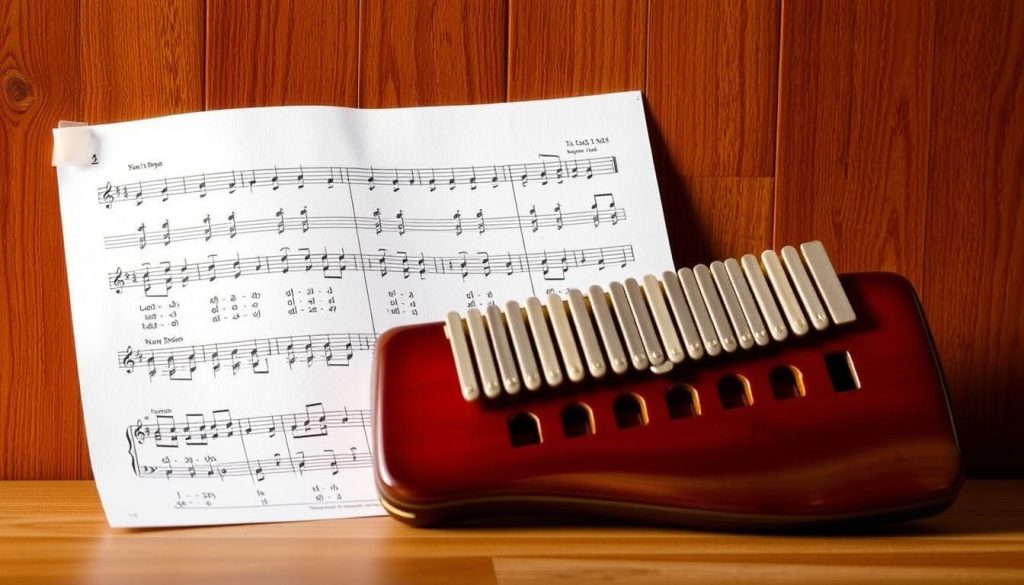
Reading dots and hole diagrams
Each dot on a diagram represents a hole to cover. The drawings show the positions of the left and right hands.
Suggested routine: look at the dots, sing the melody, then play slowly while following the tablature.
“Print the PDF and mark your breaths and dynamics to progress faster.”
| Format | Use | Best for |
|---|---|---|
| Letter notation | Helps you identify notes quickly | Beginners |
| Numbered notation | Helps you identify scale degrees and structure | Intermediate players |
| Tablature | Shows fingerings for 12 holes | All levels seeking greater fluency |
Preparing your instrument before learning a piece
Before starting a melody, take a moment to prepare your ocarina. A quick check helps prevent persistent tuning errors and lets you make the most of every minute of practice.
Checking tuning and intonation
Basic check: slowly play the full scale from low to high. Use a tuner to check each note’s pitch, especially in the upper register.
Tip: if a note is out of tune, adjust your breath slightly or check the mouthpiece joints.
Adjusting your breath and grip for better sound
Breath affects pitch: as air pressure increases, a note may rise. Find the balance that produces stable intonation.
Your grip matters too. Cover the holes with the pads of your fingers to prevent air leaks. Leaks cause wrong notes and weaken the sound.
- Materials: ceramic instruments project sound differently from wooden ones. Wood gives a warmer tone and often responds more subtly to breath.
- Warm-up routine: sustained long notes, crescendos, decrescendos and gentle glissandos to control intonation.
- Practice routine: spend 5 minutes tuning and listening, then 10 minutes working on breath before reading the piece.
“Careful preparation saves time and helps prevent bad habits.”
Ghibli songs on the ocarina: a selection of sheet music
To choose suitable sheet music, first assess whether the piece matches your skill level.
Practical criteria for sorting resources
Stated level: check the difficulty rating so you do not tackle challenging passages too early.
Type of piece: start with slow, lyrical tunes before rhythmic themes that require more articulation.
Tempo and range: make sure the range suits a 12-hole ocarina in C, so you do not encounter notes outside its range.

Useful materials and online feedback
A video shows the order of the phrases and the tempo. A PDF lets you annotate the score offline.
Read the comments: they can reveal alternative fingerings, tricky passages and breathing tips.
“The Princess Mononoke theme is rated intermediate, is arranged in C for a 12-hole ocarina, and has an accompanying video, 20 likes and 36 comments.”
Suggested approach: start with slow pieces, listen to the original version to develop expression, then move on to faster music.
A closer look at Princess Mononoke sheet music for ocarina
The Princess Mononoke theme rewards focused study of its nuances and transitions.
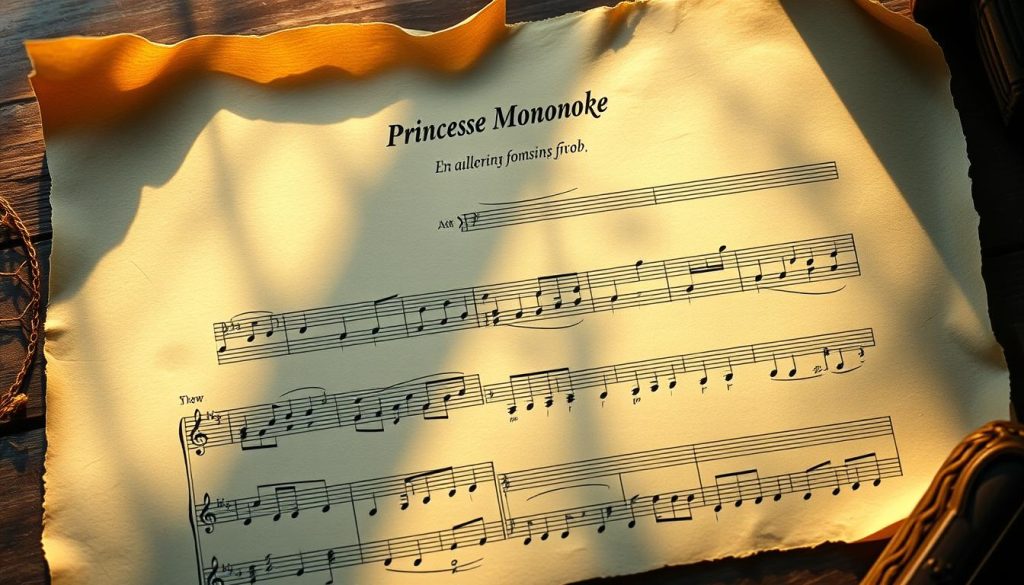
Key details: the tablature is in C for 12 holes and is compatible with double and triple models.
It was published by ocarinale on December 15, 2012, and is unlisted. Its difficulty is rated intermediate. The resource has 20 likes, an average rating and 36 comments. The sheet music corresponds to the video below its description.
How to study this theme
First, identify the phrases in the video. Play each segment slowly while following the tablature, and check the indicated finger positions.
Mark your breaths directly on the score. Find places to breathe without interrupting the melodic line.
Using online feedback
Treat the likes and rating as clues to the resource’s clarity. Read the 36 comments for advice on breathing, alternative fingerings and difficult passages.
- Method: play at a reduced tempo with a metronome, then gradually increase the speed.
- Tip: divide the theme into segments, repeat them in a loop, then play along with the video to synchronize your performance.
- Benefit: the accompanying video makes learning easier by connecting the score with the sound.
“Reading phrase by phrase, then playing slowly, helps you perform an intermediate theme fluently.”
Learn “Always With Me” from Spirited Away step by step
Start learning Always With Me by listening closely to memorize its structure before playing. A tutorial video shows the order of the phrases and the tempo; watch it several times while following the melody.
Using a tutorial video to memorize the melody
Watch the video repeatedly, then sing the phrases. This helps you memorize them and prepares you to play them on the instrument.
Choosing numbered or letter notation to suit you
If you think in scale degrees, choose numbered notation. If you prefer note names, choose the version with letters. Both formats help with memorization.
Creating ocarina tablature from a familiar melody
Isolate short passages, sing them, then transcribe each note into tablature. Draw hole diagrams and mark where to breathe.
- Listen to the song and watch the video.
- Choose numbered or letter notation.
- Isolate passages, sing them, then play them slowly.
- Transcribe them into tablature and annotate the fingerings.
- Practice with a metronome and work on musical expression.
“Focus on fluency before speed at first.”
Suggested progression for beginners and intermediate players
To progress quickly, structure each practice session around small, focused steps.
Progression: start with slow pieces that have a narrow range. Then broaden the range and increase the rhythmic complexity.
Session structure: warm up your breath and intonation, read a short passage, reinforce it slowly, then practice at your chosen tempo.
Keep a regular schedule: short daily sessions are more effective than long, infrequent ones. This routine supports lasting memorization.
- Suggested plan: one main theme to learn, one easy theme to review and one technical pattern for breath control.
- Milestones: record yourself once a week to track your intonation, steadiness and phrasing.
- Active listening: compare several performances to refine your style and dynamics.
Practical tip: check the tuning before each session and use the video and PDF to practice efficiently.
“Progress becomes visible when you regularly practice short sections and measure your results.”
Making the most of video and metronome practice
Using a video and a metronome makes a session more focused and measurable. Start by observing the order of the phrases in the video linked to the tablature.
Observe the order of the notes, then find the right tempo
Identify the articulation and key points of each phrase first. Then practice each section repeatedly.
- Watch the video to note the exact order of the notes and the accents.
- Use a metronome: start 20 to 30 bpm below the target tempo, then gradually increase it for consistent results.
- Mark visual and aural cues to recognize the start of phrases and cadences.
- Work on each element separately: breath and grip first, then articulation.
- When the video matches the transcription exactly, use the opportunity to correct your intonation and rhythm.
“Watch the video once, play through twice, then check against the video: repeat this cycle to strengthen your memory.”
| Step | Action | Duration |
|---|---|---|
| Observation | Watch the video and mark difficult passages | 2 to 5 min |
| Slow practice | Set the metronome 20 to 30 bpm below the target tempo | 5 to 10 min |
| Reinforcement | Increase the tempo in stages | 10 to 15 min |
For a tempo reference, see this useful resource: tempo reference.
Instrument quality and accessories to consider
Your choice of material and model directly affects comfort and intonation. A well-made instrument makes it easier to control dynamics and sustain phrases.
Materials and sound character
Ceramic: it offers projection and clarity. Choose it if you want a precise, bright sound.
Wood: it gives a naturally warm tone and a flexible response to breath. Choose it for a fuller sound.
Single, double or triple chamber
The type of chamber affects range and transitions between notes. A single-chamber model is enough for most of the repertoire.
Double and triple models offer a wider range and avoid breaks in passages that span several registers.
Build quality and buying advice
Check that the holes are cleanly finished, the joints are airtight and notes are evenly in tune across the instrument’s range. These criteria reflect its overall quality.
For a good purchase, choose a reputable brand and try the instrument if possible. Check how it responds to your breath and how stable its tuning is.
Useful accessories
- A hard case and stand to protect the instrument.
- A cleaning cloth and mild soap for its finish.
- A tuner, metronome and music stand for effective practice sessions.
“Consistent build quality directly affects progress, just as it does with a well-set-up guitar.”
Finding inspiration in Studio Ghibli sheet music collections
Explore print and digital collections to find melodic lines that are easy to transpose.
Piano, violin, cello, guitar and flute: adapting melodies
Collections for piano and flute offer clear melodic lines. Look for titles such as Joe Hisaishi: Ghibli Best Stories – piano or Studio Ghibli Melodies 100 sheet music for solo flute.
Violin and cello versions often have a naturally lyrical melodic line. They can be adapted easily into ocarina tablature.
Finding beginner editions, large notes and fingerings
Practical tips:
- Choose “Easy/Big-Note” editions with letters and fingerings to make adaptation easier for beginners.
- Isolate the main melody, check that its range fits a 12-hole ocarina and adjust the key if needed.
- Simplify a piano accompaniment into a single melodic line suited to your breath.
- Use solo guitar versions to identify simple rhythmic patterns.
“Choose collections with tempo, dynamics and phrasing markings to guide your performance.”
Musical context: Joe Hisaishi and the films
Joe Hisaishi’s music is instantly recognizable for its simple, moving motifs.
Mamoru Fujisawa, known as Joe Hisaishi, composed music for Nausicaä (1984), Castle in the Sky (1986), My Neighbor Totoro (1988) and Spirited Away (2001). His writing helped shape the sound of these animated worlds.
From Nausicaä to Spirited Away: a distinctive melodic style
Characteristics: repeating motifs, modal harmonies and expansive melodies. These elements encourage lyrical playing, ideal for a solo instrument.
For the performer, this calls for breath control, a sustained melodic line and careful handling of dynamics. Long phrases invite you to work on where to breathe and how to sustain the sound.
The gentle transitions and harmonic progressions in these soundtracks encourage flexible phrasing. Playing these themes helps develop dynamics and expression.
“Listening to several Hisaishi soundtracks can refine your expressive range and help you match your phrasing to each film’s atmosphere.”
- Place each theme in context: characters, atmosphere and emotional intensity.
- Compare different versions to choose dynamics and tempos.
- Bring these observations into your daily exercises to improve your style.
Checklist before playing a new song
Before opening a new score, follow a short routine to prepare your session.
Check the stated difficulty and whether it suits your level. If it seems too advanced, choose a simplified version or slow the tempo.
Check the instrument’s tuning and play a few reference notes to settle your breath and intonation.
Make sure the score matches its accompanying video. Set a metronome to the target tempo, then lower it for your first attempts.
- Identify where to breathe and mark those points directly on the score.
- Mark difficult fingerings and read community feedback to anticipate common problems.
- Divide the melody into short sections and set measurable goals for each.
- Make time for an opportunity to record yourself with a phone or webcam so you can measure your progress and correct mistakes.
“Always spend 5 minutes on this check: you will practice more efficiently and get better results.”
| Check | Action | Why |
|---|---|---|
| Difficulty | Compare the stated level with your own | Helps prevent frustration |
| Tuning | Play reference notes with a tuner | Stabilizes intonation |
| Consistency | Check the score, video and metronome together | Ensures a consistent learning process |
Conclusion
Keep a simple routine that turns practice into lasting results.
Choose a suitable score, understand its notation (numbered, letter or tablature), and steady your breath and intonation so you can play expressively.
Always match the score, tablature and video: watch before playing, mark where to breathe and organize your practice into 15- to 20-minute sessions.
Explore the Studio Ghibli repertoire, consult piano or guitar collections, try the Mononoke score and the method for Always With Me, then share a recording. A thoughtful comment often helps the community and other learners.
Now it’s your turn: choose a song, prepare your instrument and begin. You’ll soon hear your progress.