
This practical guide takes you step by step through a famous melody from The Legend of Zelda: Ocarina of Time.
You will learn how to adopt good posture, control your breath, and cover the holes properly. We also explain how to read tablature for a 12-hole ocarina in C and put each phrase together for a smooth performance.
Skill level: suitable for motivated beginners and useful for intermediate musicians who want to work on articulation, rhythm, and pitch. Alternative versions and French-language tablature will help you vary your practice.
This short plan anticipates common problems — blowing too hard, failing to cover holes completely, and imprecise transitions — and offers simple corrections to help you improve quickly.
Final goal: play the piece from beginning to end with a steady tone, confident rhythm, and expressive musicality.
Introducing the Theme and Useful Ocarina Resources
This section compares instrument models, explains the value of a French-language site, and points you toward reliable tablature.
Why This Theme Stands Out in the Game
This melody is instantly recognizable, combining rhythmic energy with lyrical lines. It helps beginning musicians develop their sense of rhythm and dynamics.
Which Ocarina to Choose: Models and Uses
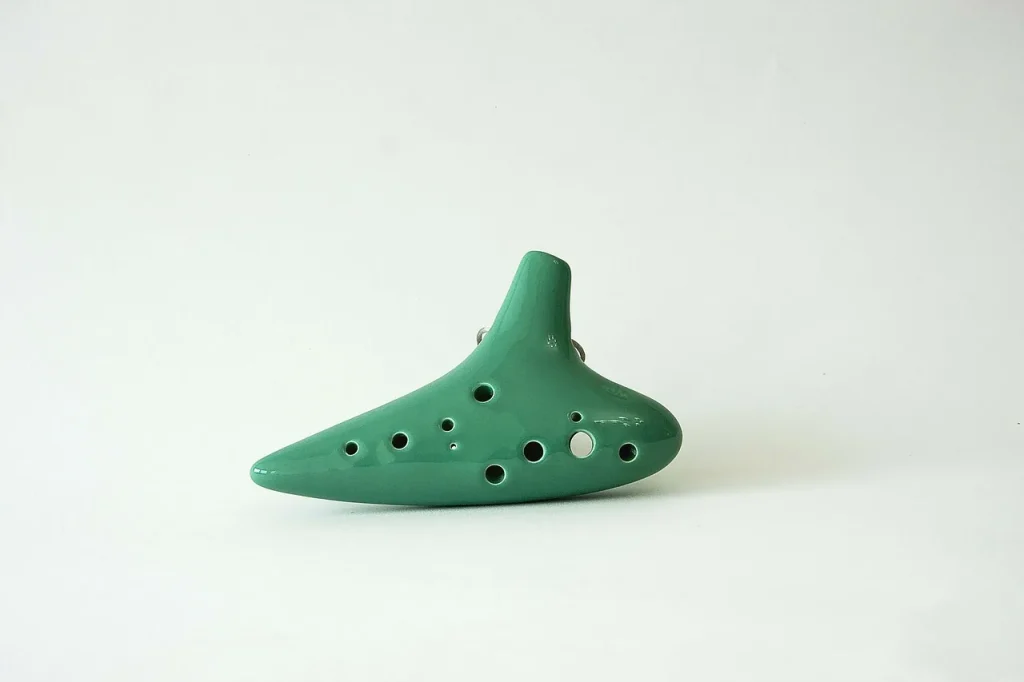
The 12-hole ocarina remains the standard choice for learning because plenty of tablature and standard fingerings are available for it. Ten-hole, double, and triple models offer different ranges and an extended register to suit your needs.
Where to Find Reliable Tablature and Notes
A French-language site brings together simple scores in tablature form and step-by-step explanations. The version for a 12-hole ocarina in C published on December 29, 2012, by “ocarinale” (12 likes, 15 comments) is a good starting point.
Different Versions and Their Difficulty Levels
Several contributors (joebertin, Coach, Link016, melycat, ocarina, TristanLaurens, zelda) offer variations. Some are marked as having “no” difficulty; others add ornaments to help you work on expression.
- Beginner: simple tablature with a clear sequence of notes.
- Intermediate: variations and small ornaments.
- Advanced: demanding arrangements and detailed dynamics.
Gerudo Valley on the Ocarina: Learn the Iconic Theme Step by Step
Start by tuning your instrument and adopting a stable position to improve your accuracy from the first attempts.
Posture and breath: keep the ocarina close to your face, your wrists relaxed, and your elbows slightly out. Breathe in through your nose and blow steadily and moderately to stabilize your pitch.
Covering the holes: seal each hole completely with the pads of your fingers. Prepare for transitions and keep your fingers close to the holes to limit air leaks.

Read and Break Down the Music
The site’s tablature shows the notes in sequence, making it easier to read the music step by step. Mark difficult fingerings in pencil and identify recurring patterns.
Break the melody into phrases of one or two measures. Practice each segment slowly with a metronome, then increase the tempo in stages.
“A good technical foundation makes your performance more expressive and less stressful.”
| Step | Goal | Suggested time |
|---|---|---|
| Posture and tuning | Stability and accurate pitch | 5 to 10 min |
| Short phrases | Note accuracy | 10 to 20 min |
| Rhythm and tempo | Energy and accents | 5 to 15 min |
| Putting it together | Smooth performance | 10 to 30 min |
Put it together: join two segments you have mastered, check the pitch of sustained notes, then play the whole piece while paying attention to articulation and dynamics.
Practice Tips, Common Mistakes, and Playing Variations
Focus on short, rhythmic repetitions to correct air leaks and make your note attacks consistent.
Common Mistakes When Covering Holes and How to Fix Them
Fix air leaks: if a note sounds muffled, reposition your fingers to cover the holes completely. Check that your nails do not prevent a proper seal, especially during quick leaps.
Adjust your pitch: blowing too hard pushes notes sharp. Reduce the pressure, slightly adjust the angle of the instrument, and practice with a metronome to achieve clean attacks.
Smooth out transitions: slowly repeat two or three notes in a loop, then speed up while maintaining the same tone quality.
Explore Other Versions and Arrangements to Enrich Your Playing
Visit the site to compare tablature by joebertin, Coach, Link016, melycat, ocarina, TristanLaurens, and zelda.
- Compare ocarinale’s version for a 12-hole ocarina in C with “STL Ocarina” arrangements to vary your fingerings and ornaments.
- Read the comments and likes to find useful tips shared by the community.
- Schedule short sessions: technique (5 to 10 min), sections (10 min), then a complete run-through (5 min).
“Focused practice and attention to feedback on the site speed up progress.”
Conclusion
Follow a gradual method to turn short phrases into a smooth, confident performance. Remember the essentials: work on posture, covering the holes, breath, and articulation to produce a steady sound.
Use reliable French-language tablature, including the version for a 12-hole ocarina in C (12 likes, 15 comments), then try several variations published by the community. This speeds up learning and helps you choose an arrangement that suits your style.
Stay motivated: set a reference tempo, record yourself each week, and compare the same passages. Then expand your repertoire and add subtle touches to your phrasing to give each ocarina performance character.